Khatushyamji
"Haare Ka Sahara, Baba Shyam Hamara"
The Complete Story of the God of Kaliyuga: Origins, Miracles, and Divine Legacy
Khatushyamji — also known as Shyam Baba, Khatu Naath, Sheesh Ke Daani (the giver of his head), and Haare Ka Sahara (the refuge of the defeated) — is a revered deity worshipped primarily in Rajasthan, Haryana, Uttar Pradesh, Gujarat, and now across all of India and the Indian diaspora worldwide.
Divine Name Layers
Shyam Baba
Krishna-linked devotional identity.
Sheesh Ke Daani
Title of supreme head donation.
Haare Ka Sahara
Support for the broken and defeated.
Khatu Naath
Place-anchored sacred identity.
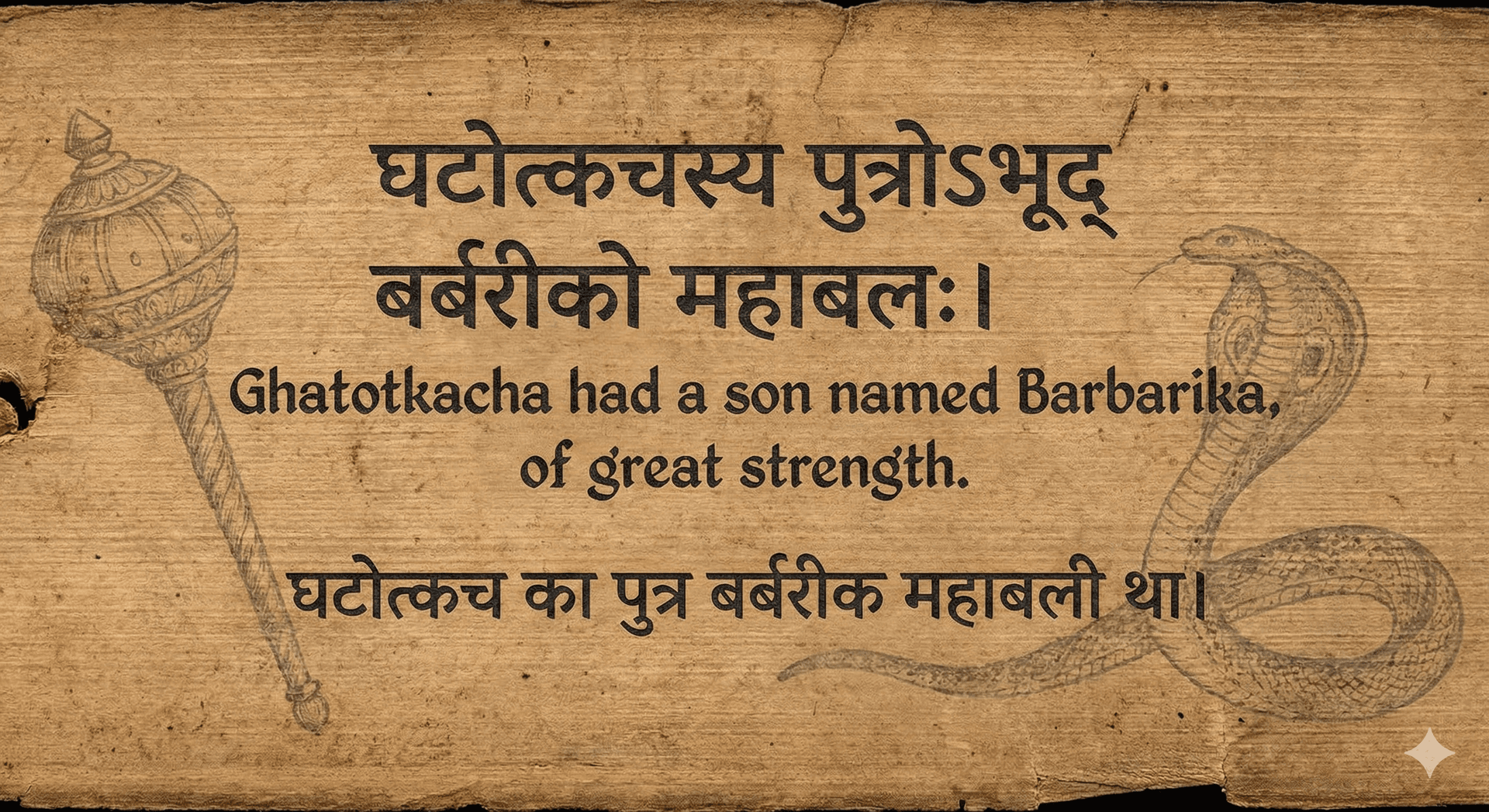
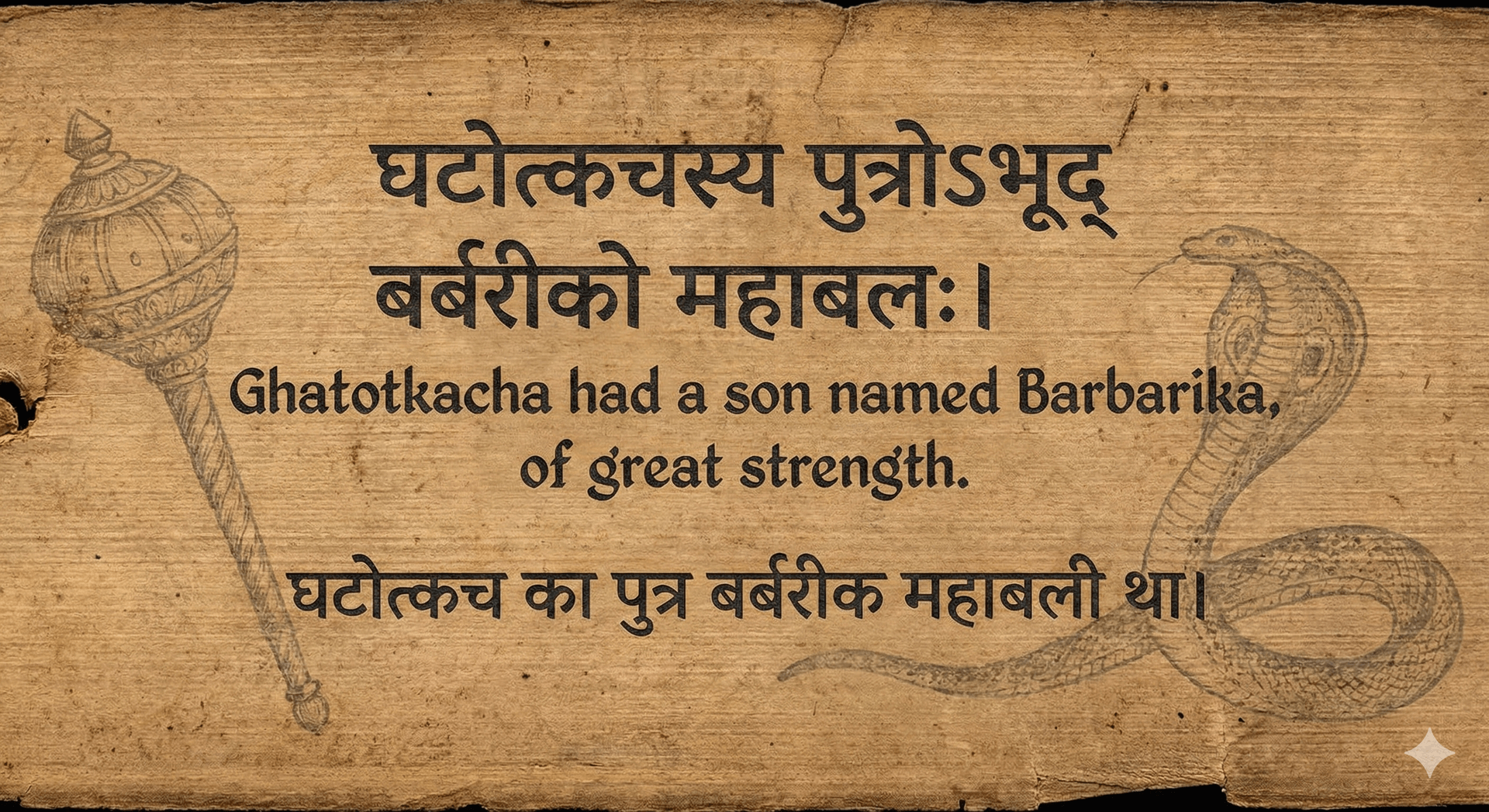
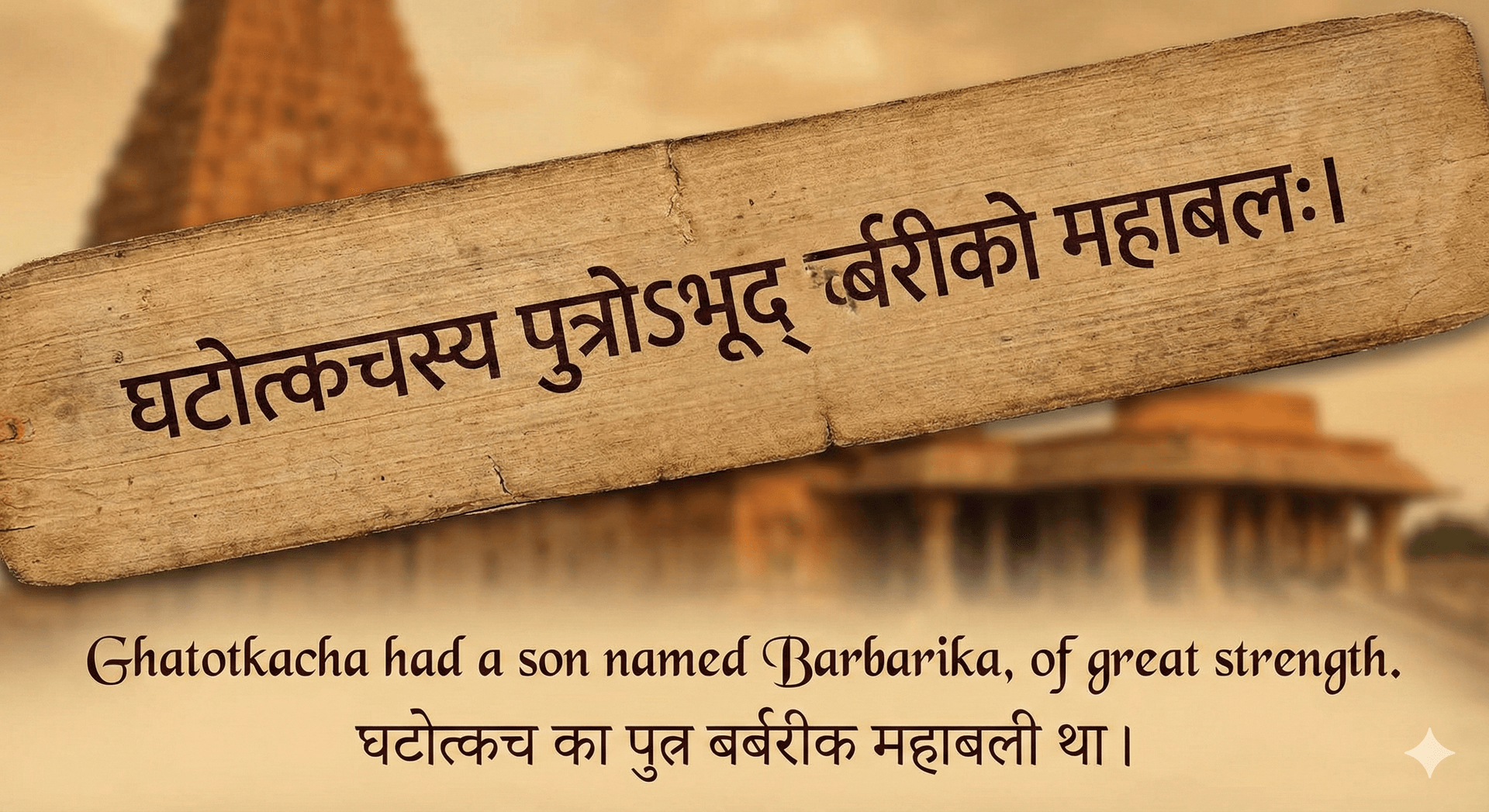
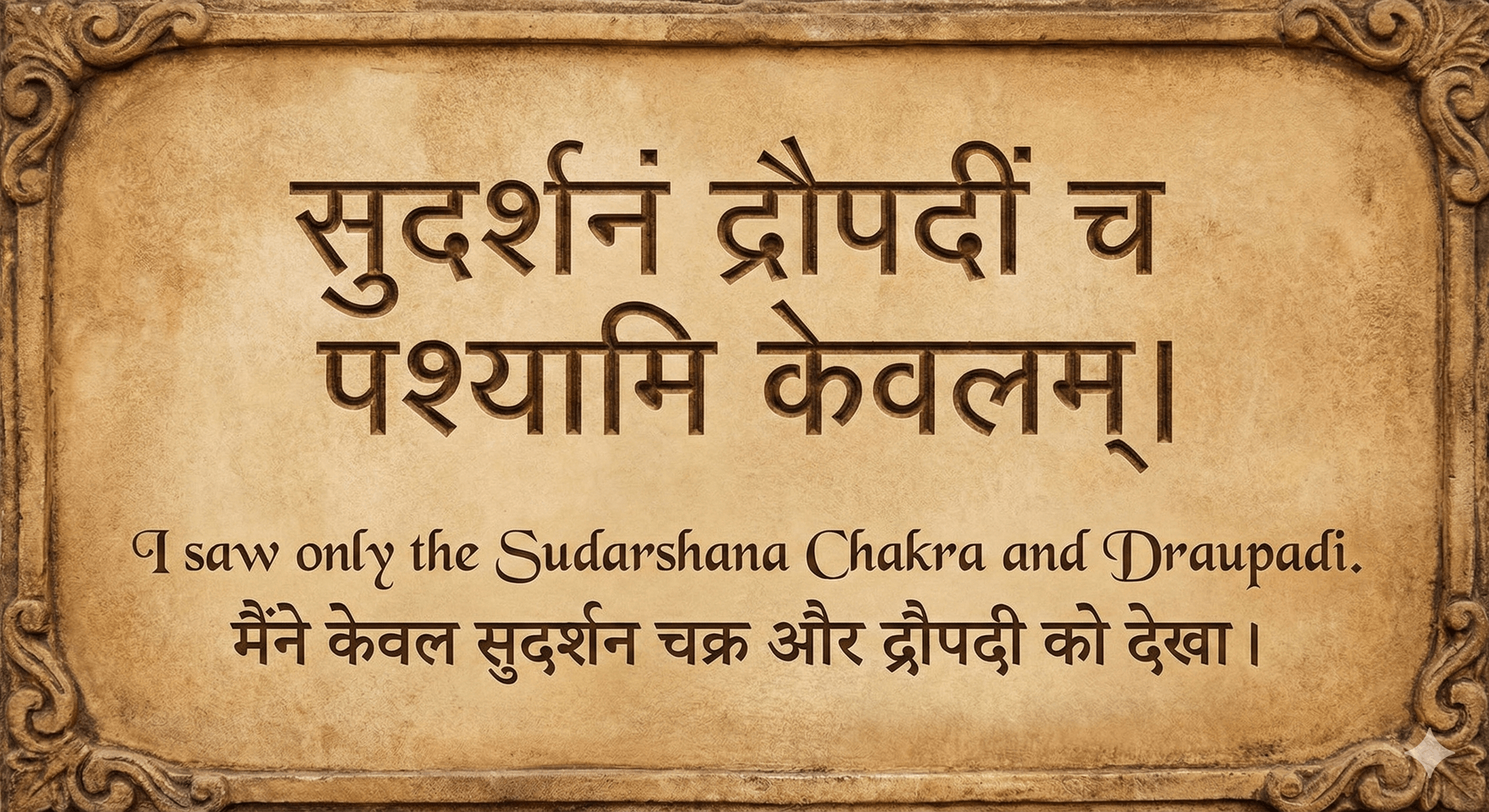
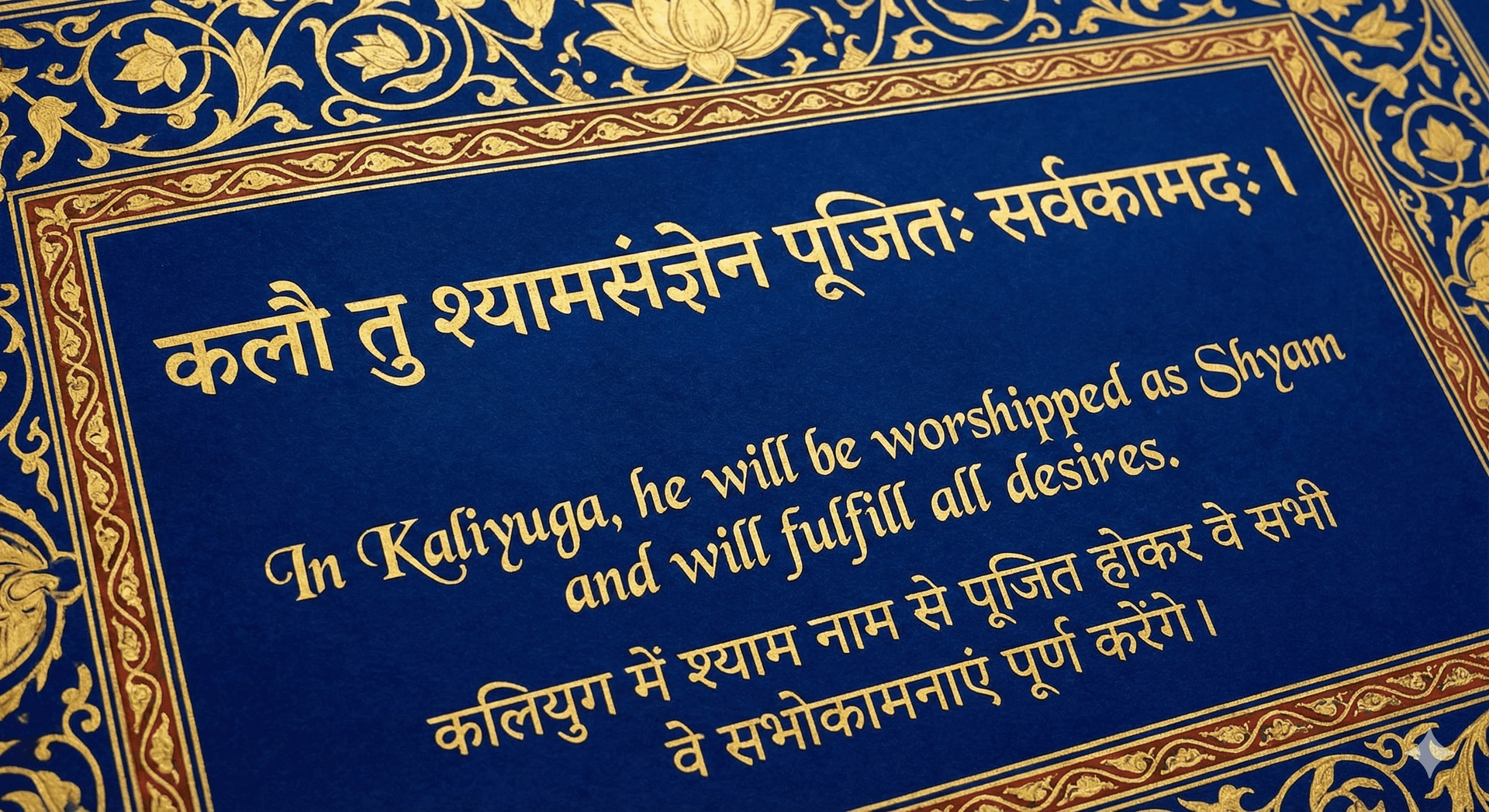
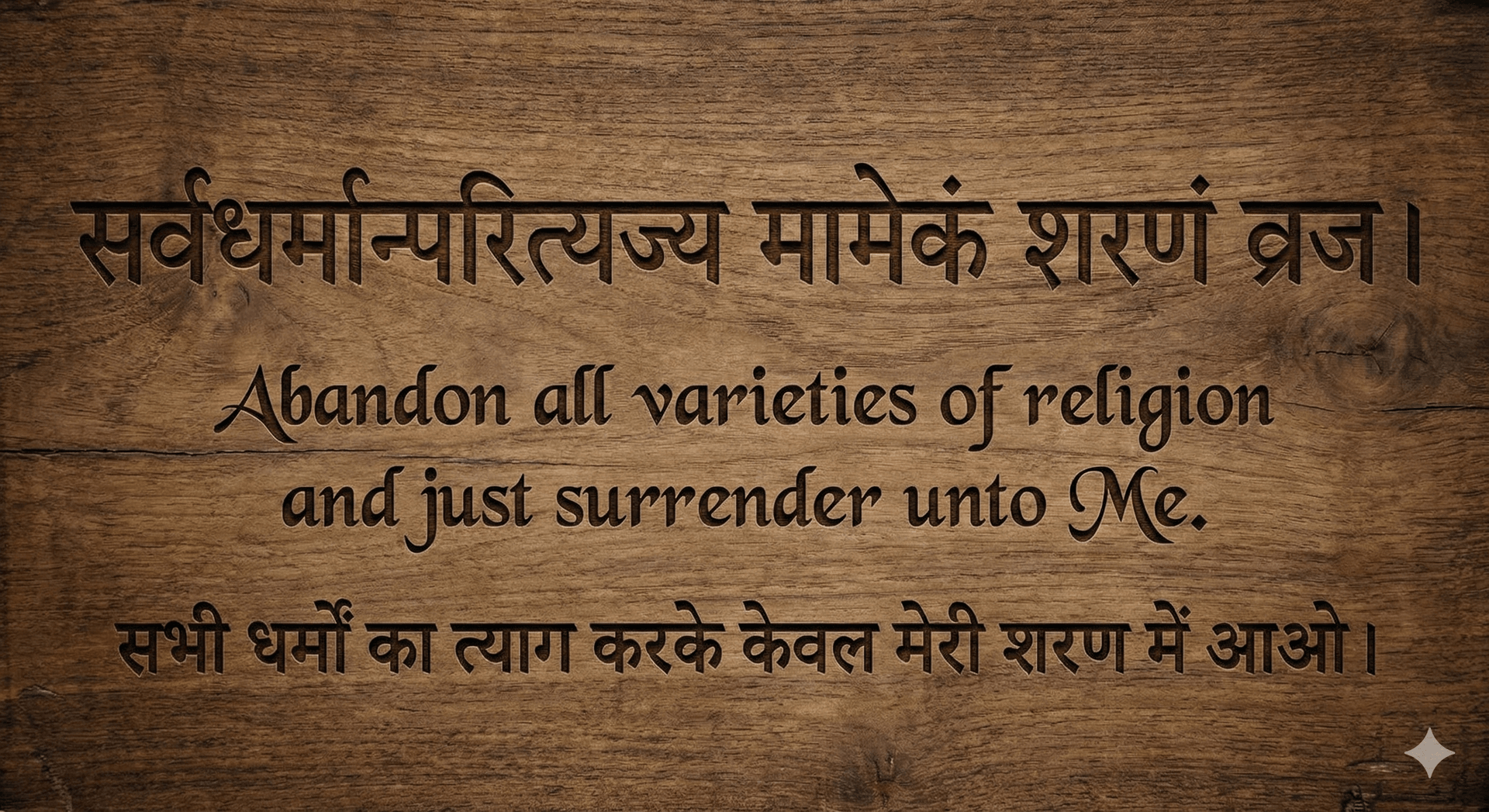
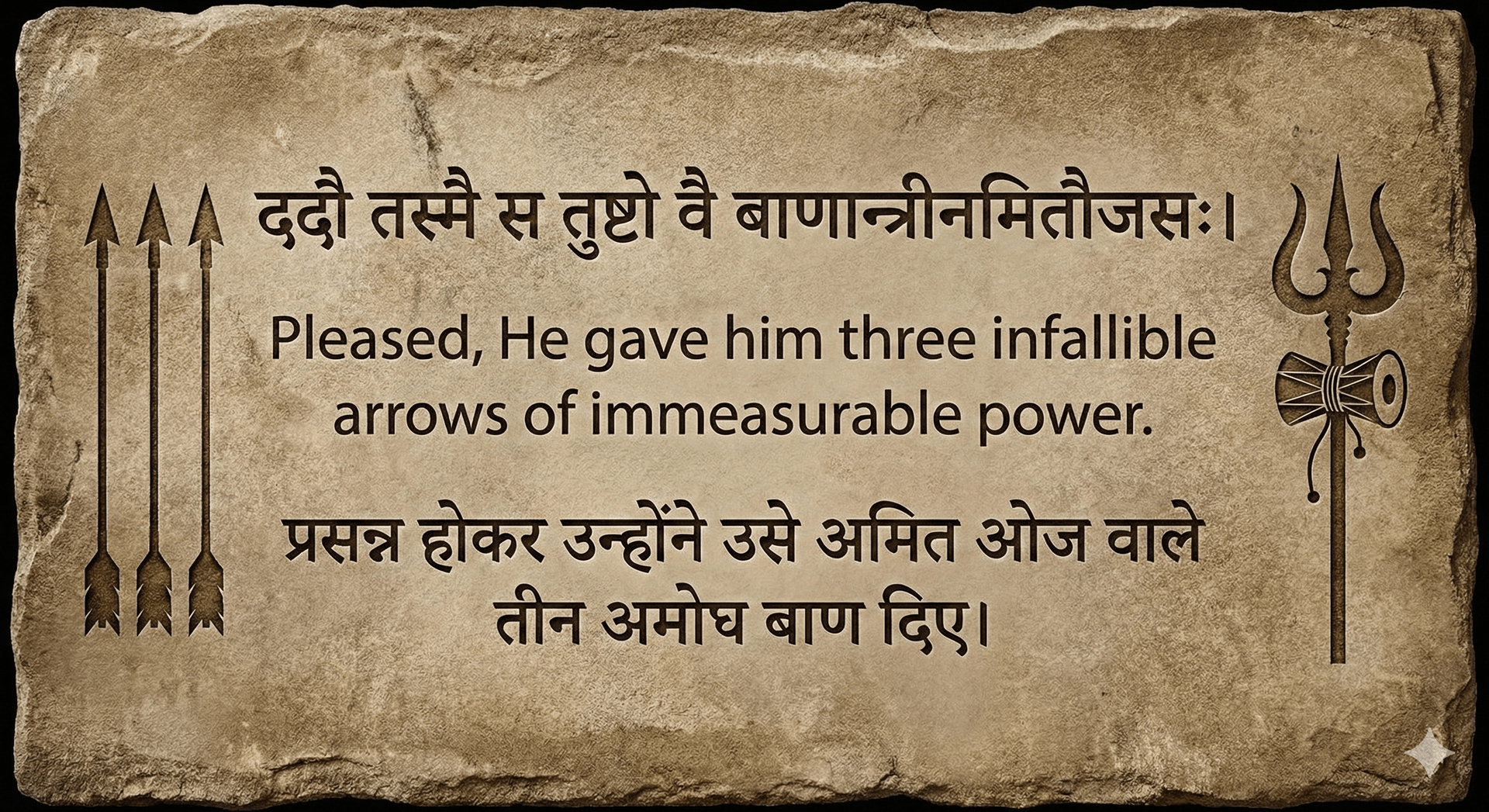
Sacred Text Plate Context
Visualizing the sacred name layers through historic textual evidence.
He is formally considered the God of Kaliyuga, and his millions of devotees believe he answers every sincere prayer with unfailing compassion. His divine identity originates in one of Hinduism's greatest epics — the Mahabharata — where he was born as Barbarika, the most powerful yet selfless warrior the world had ever seen. The 21st century has witnessed an exponential surge in his worship, driven by economic anxiety, digital amplification, and his supreme accessibility: "No elaborate rituals needed, only sincere surrender."
Part I: The Mahabharata Origins
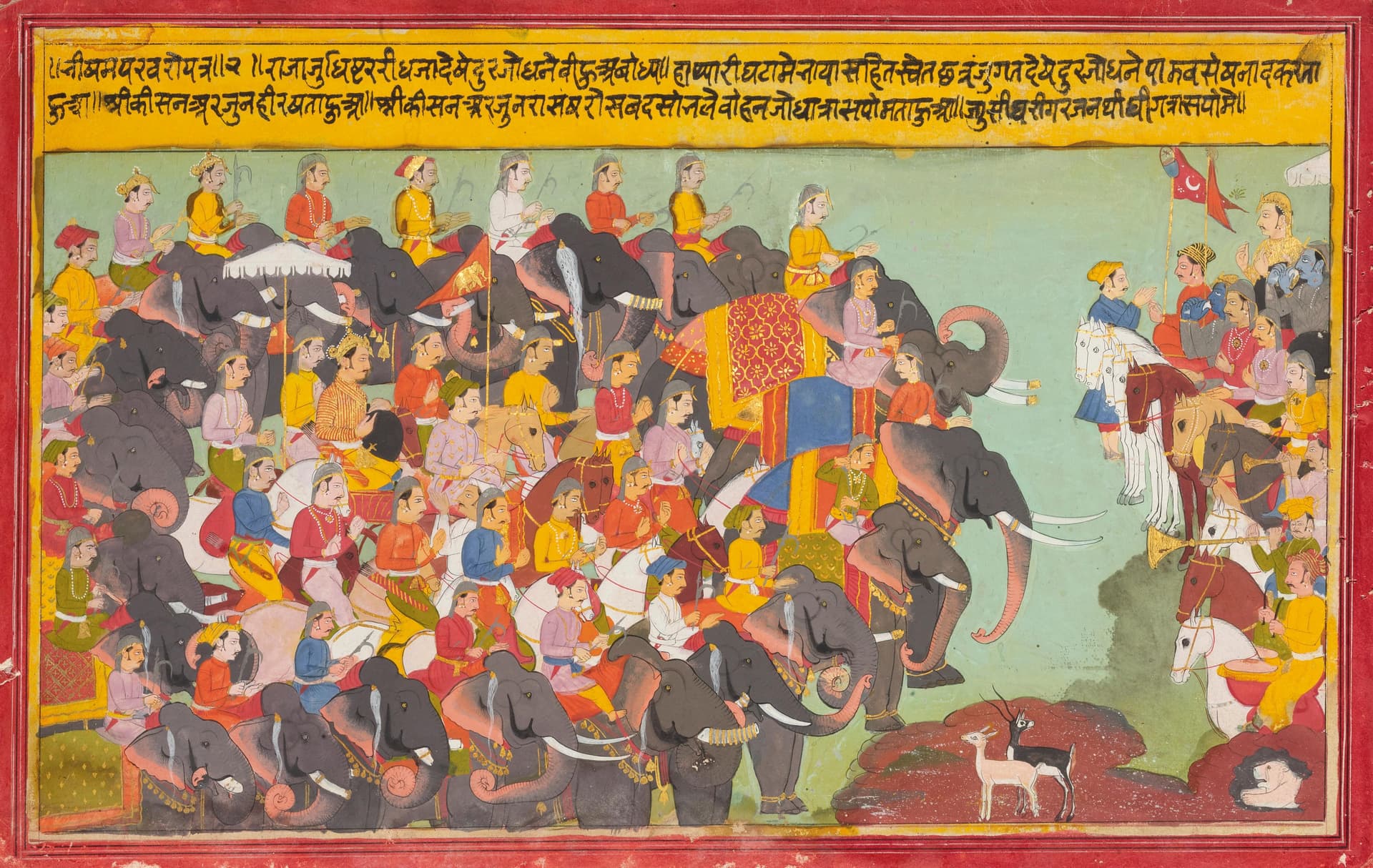
The Great Kurukshetra War — The Epicenter of Barbarika's Sacrifice
The Divine Lineage
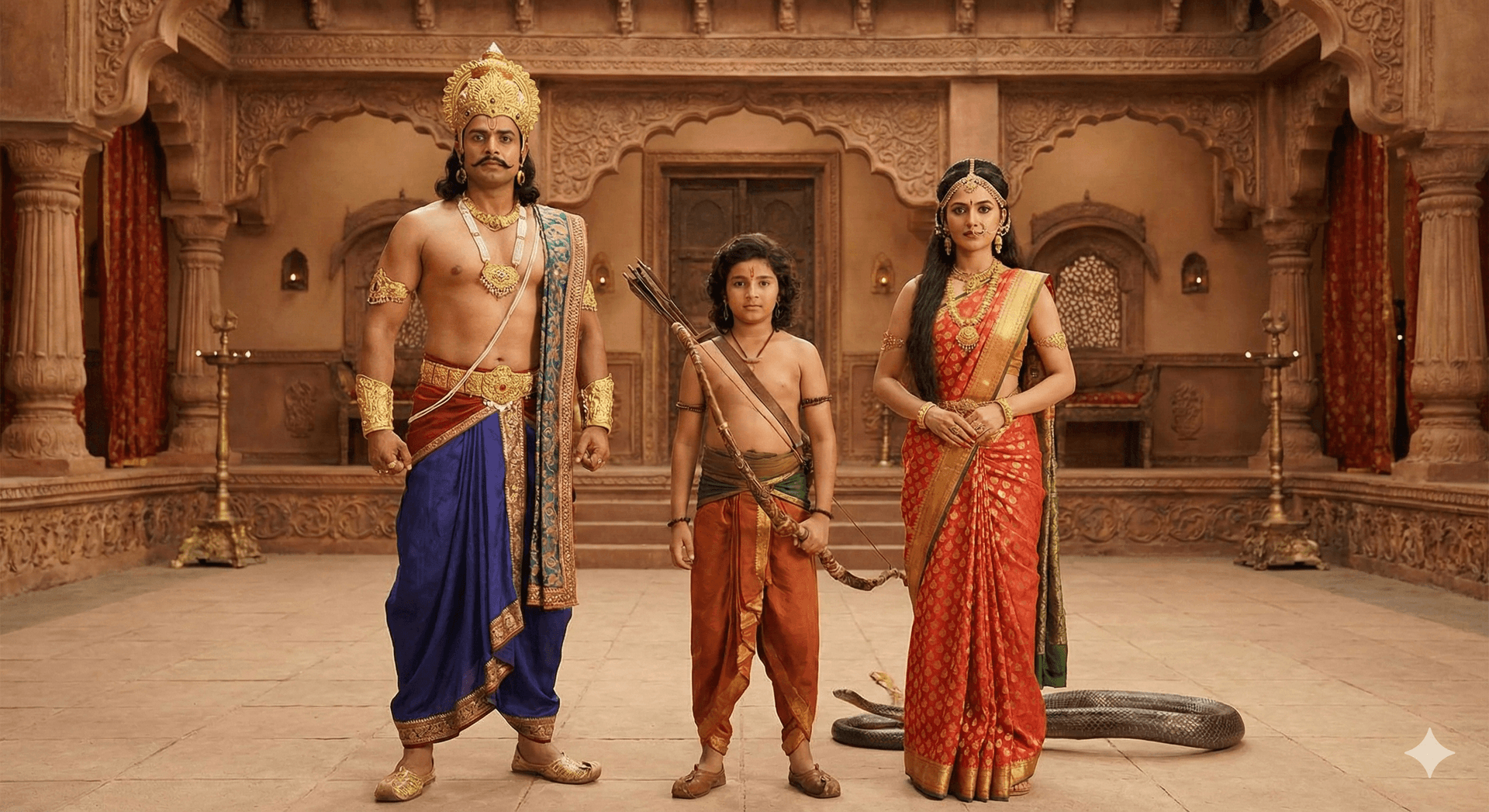
Barbarika was born into the illustrious Pandava lineage. His grandfather was Bhima (the second Pandava brother and the spiritually endowed son of Vayu, the God of Wind). Bhima's union with the Rakshasi Hidimbi produced Ghatotkacha, a formidable half-Rakshasa warrior who possessed immense physical strength and mastery over magical illusions (Maya Vidya).
The lineage of Barbarika's mother is incredibly significant and is intricately detailed in the Skanda Purana. According to the Kaumarika Khanda of the Maheshvara Khanda, Lord Krishna authorized Ghatotkacha to travel to the city of Pragjyotisha to seek the hand of Kamakatankata (also known as Ahilavati or Maurvi), a Naga-blessed warrior princess. She challenged him to a multifaceted duel involving intellectual questions, magical prowess, and physical force. Ghatotkacha defeated her across all three domains, prompting her to surrender and accept him as her husband. This union created a unique genetic convergence, endowing Barbarika with human martial prowess, Rakshasa supernatural abilities, and Naga mystical knowledge.
Ancient depiction of the Pandava Lineage
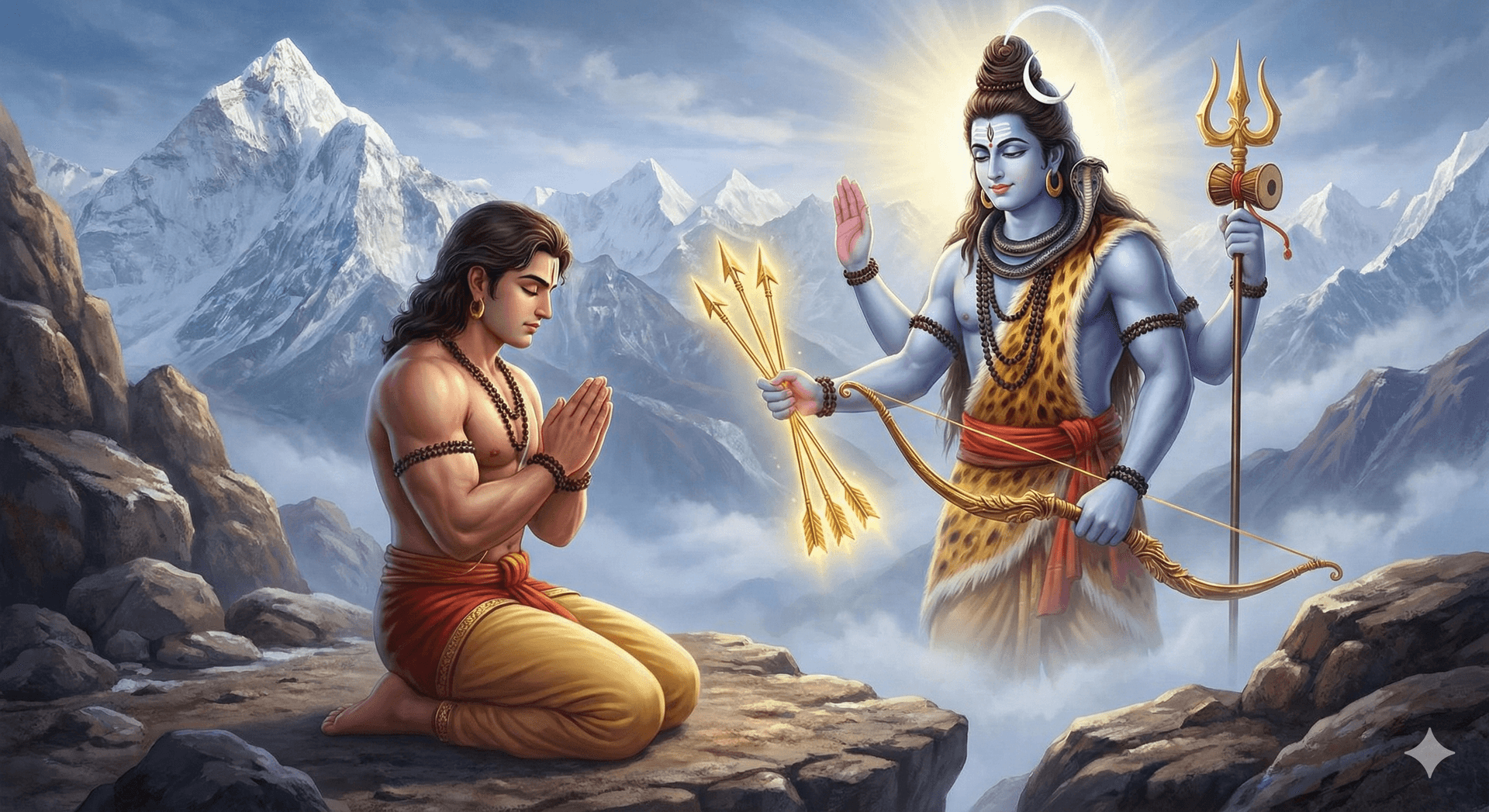
The intense austerities of Barbarika
The divine boon from Lord Shiva
The Three Divine Arrows (Teen Baan)
Determined to attain unmatched martial supremacy, Barbarika undertook an agonizing twelve-year penance (tapasya) dedicated to Lord Shiva, standing entirely on one leg in the Himalayas. Pleased by this absolute devotion, Lord Shiva manifested and granted Barbarika three infallible divine arrows (Divya Astras), alongside the absolute guarantee of victory for whichever faction he supported.
- 🎯First Arrow (Red Marking)Seeks and permanently marks all targets intended for absolute destruction. Evasion or magical defense is impossible once marked.
- 🛡️Second Arrow (Blue Protection)Seeks and permanently marks all targets Barbarika intends to protect. Entities marked by this arrow are rendered universally invincible against all celestial and earthly weaponry.
- ⚡Third Arrow (Golden Annihilation)Annihilates all targets marked by the first arrow instantly, transcending physical space, and subsequently returns to the quiver alongside the other arrows.
The Cosmic Implication: With just these three arrows, Barbarika possessed the capability to end any universal conflict in less than sixty seconds. He alone could win the entire Kurukshetra war.
The Fatal Vow and The Brahmin's Test
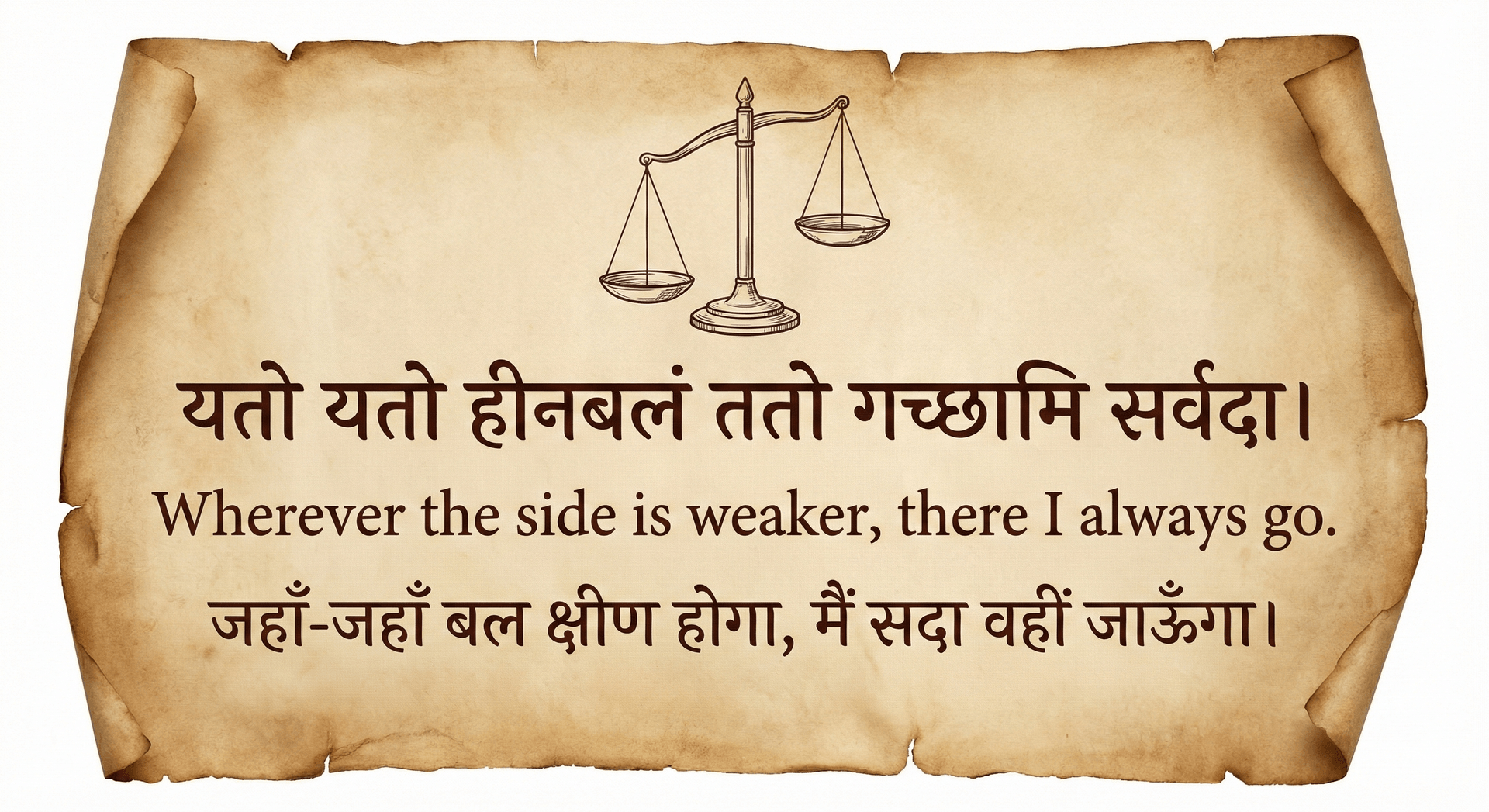
Before his departure for the great war, his mother Ahilavati extracted a sacred vow deeply rooted in the Kshatriya code of honor: if he were to participate in the battle, he must always fight for the side that was losing or objectively weaker.
However, this noble vow contained a catastrophic logical paradox that threatened the very fabric of the universe. The Kaurava army consisted of 11 Akshauhinis, while the Pandavas commanded only 7. Initially, Barbarika would target the Kauravas. Within seconds, the Kaurava numbers would plummet below 7, making them the weaker side. Compelled by his vow, Barbarika would instantly switch allegiances and attack the Pandavas. This infinite, rapid-fire loop of switching allegiances meant that ultimately, within moments, both armies would be completely annihilated. The only survivor of the war would be Barbarika himself.
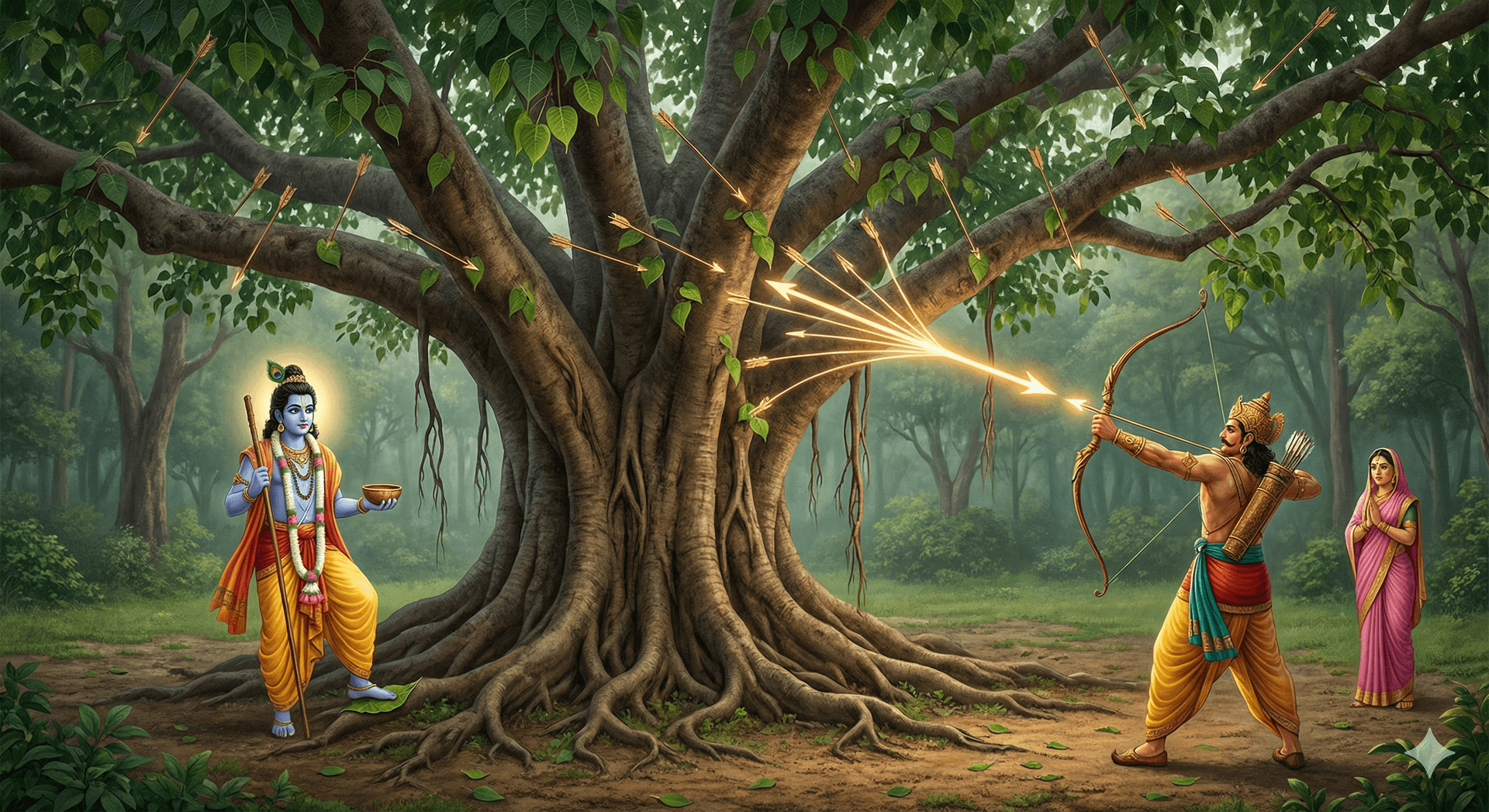
Lord Krishna, the Supreme Being, possessed the omniscience to recognize this apocalyptic threat. If everyone died senselessly, the pedagogical purpose of the Mahabharata (to establish Dharma) would be voided. To neutralize this, Krishna disguised himself as a wandering Brahmin and intercepted Barbarika. To test the warrior, Krishna challenged him to pierce every single leaf of a massive Peepal tree with a single shot.
When Barbarika released the arrow, it instantly marked every leaf. However, Krishna had deliberately hidden one fallen leaf beneath his foot. The arrow ominously hovered over the Brahmin's foot, proving that Barbarika's power was absolute, bypassing even divine physical obfuscation.
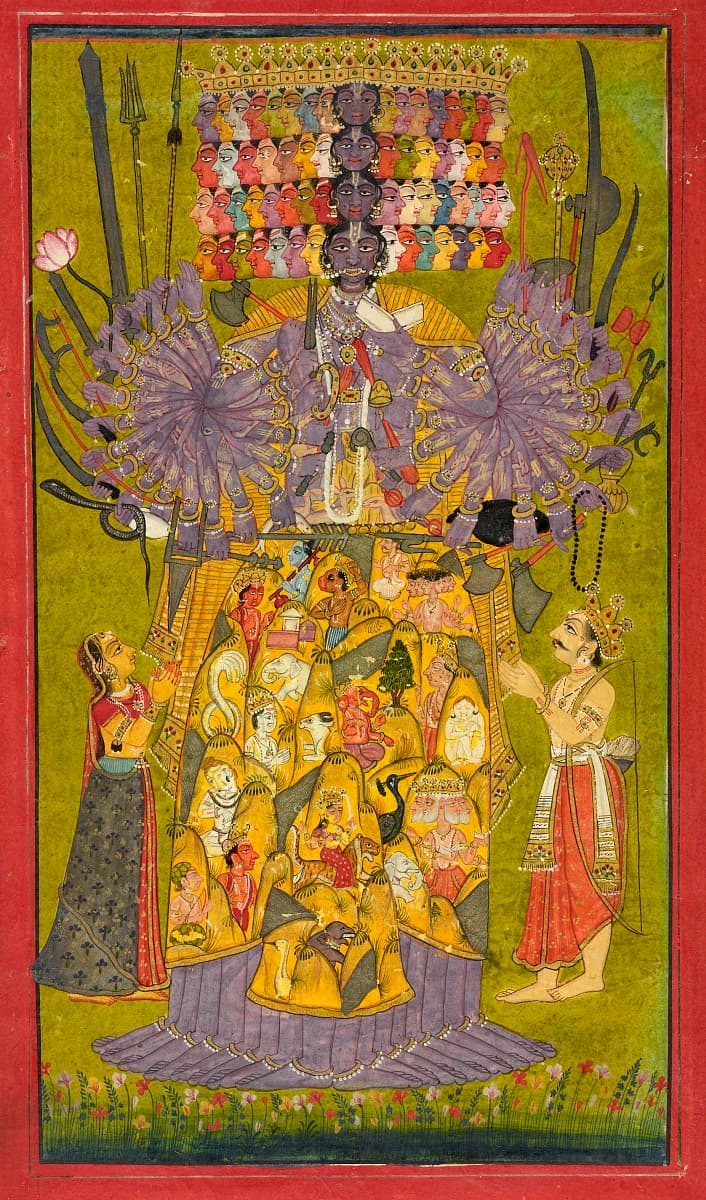
Krishna reveals his Vishvarupa (Universal Form) after testing Barbarika.
The Supreme Sacrifice: The Sheesh Daan
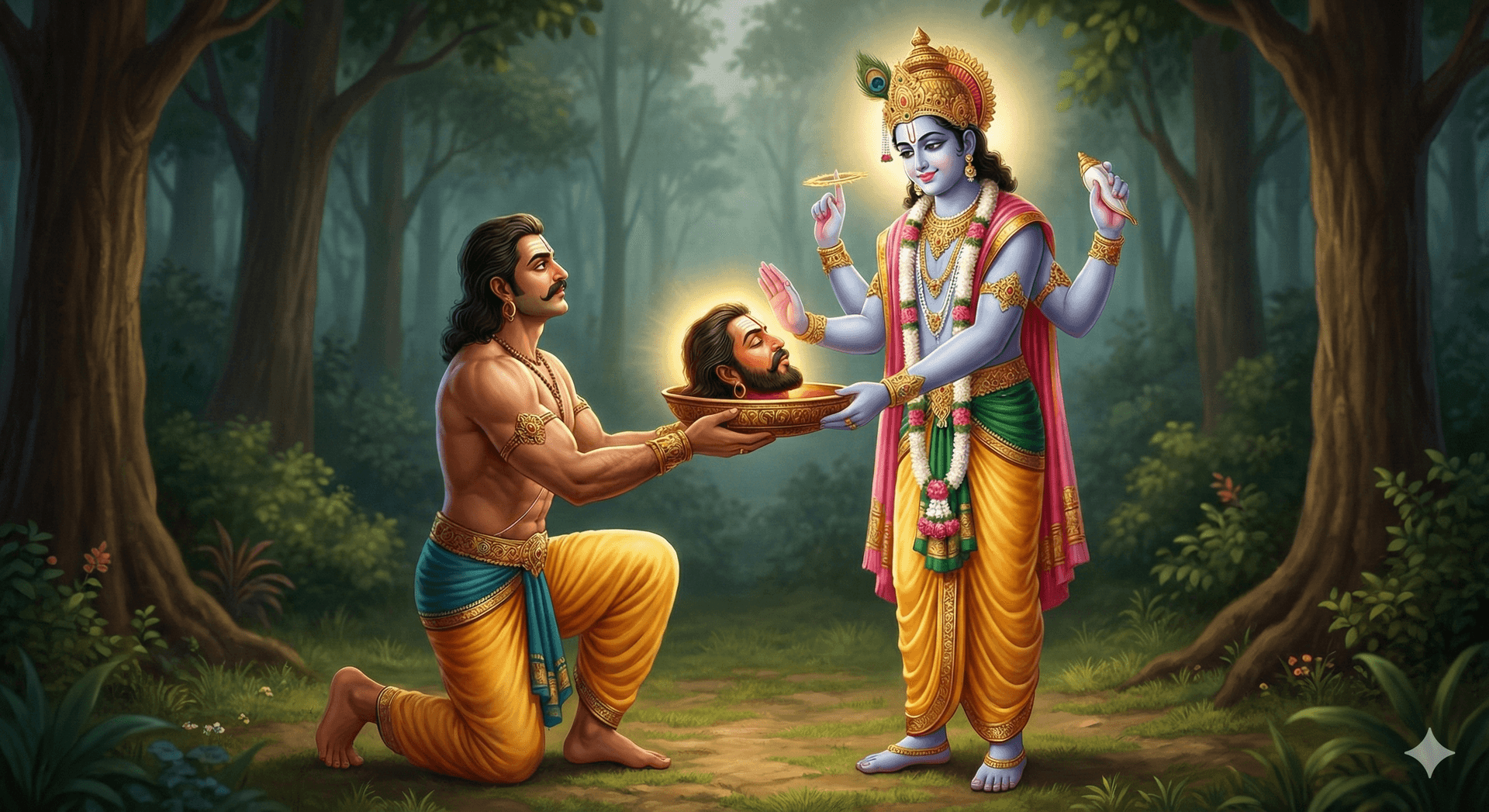
Having confirmed the ultimate threat, Krishna revealed his true, awe-inspiring divine form (Vishvarupa). He made an unprecedented demand: he asked for Barbarika's head (Sheesh) as an act of charity (daan) before the battle commenced.
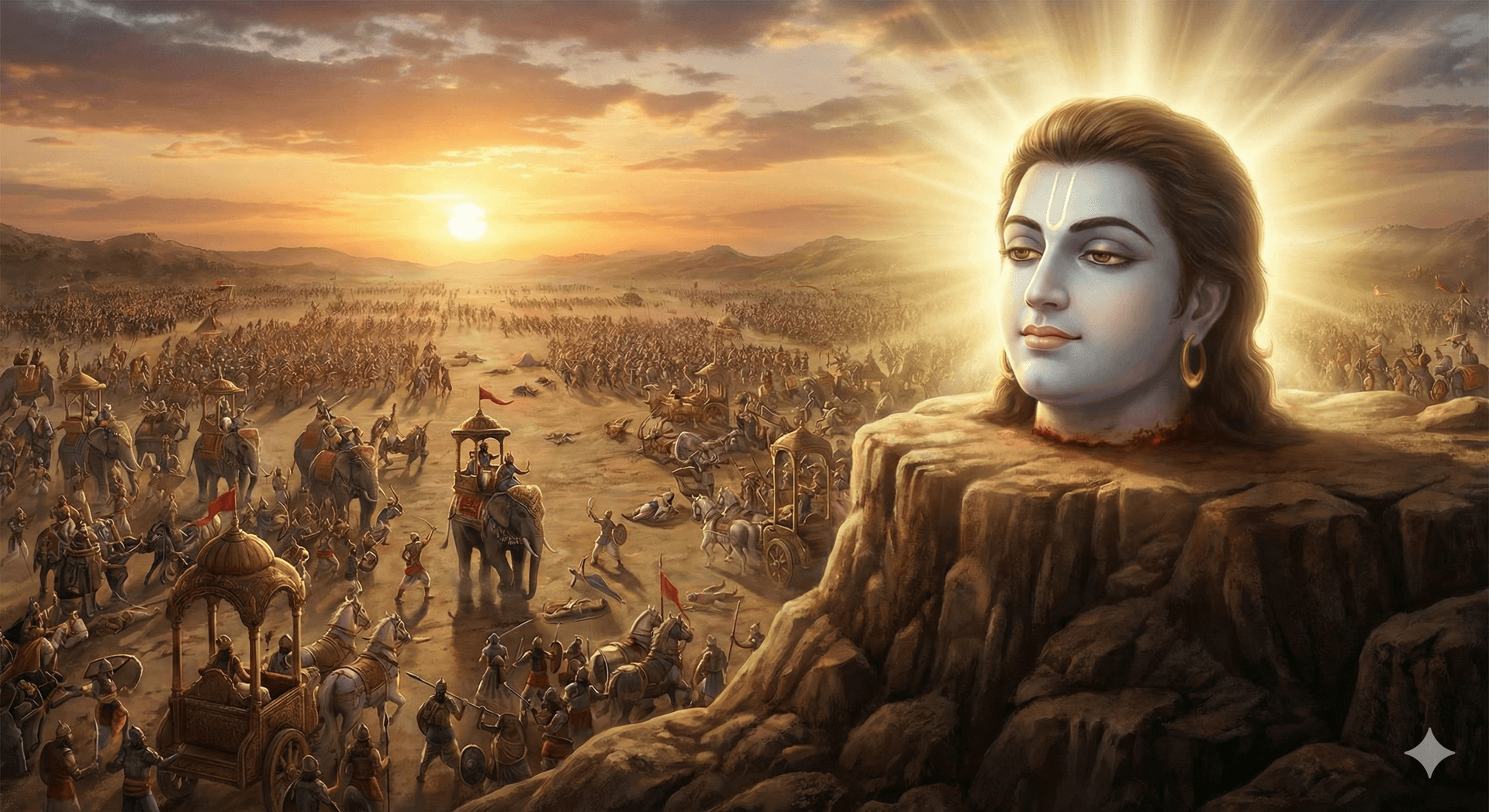
Personifying the highest scriptural ideals of Sharanagati (absolute surrender) and Nishkama Karma (selfless action devoid of ego), Barbarika did not hesitate or negotiate. He agreed, asking only one singular boon: to witness the entirety of the 18-day war. Krishna granted this wish with immense compassion. Time stood still on the 12th lunar day of the Phalguna month as Barbarika gracefully severed his own head with his sword.
The Skanda Purana Authority
The most authoritative and exhaustive account of Barbarika's sacrifice is codified in the monumental Skanda Purana (specifically Chapter 60-68 of the Kaumarika Khanda). The text preserves powerful Sanskrit invocations praising his divine act:
"बर्बरीकाय नमः श्रीकृष्णवरप्रदाय।
कलियुगवन्दिताय नमः शीर्षदानधारिणे॥"
"Barbarīkāya namaḥ śrīkṛṣṇavarapradāya, kaliyugavanditāya namaḥ śīrṣadānadhāriṇe"
"Salutations to Barbarika, the bestower of boons blessed by Sri Krishna. Salutations to the one praised in Kaliyuga, the bearer of the sacrificed head."
The God of Kaliyuga
As the 18-day war concluded, Lord Krishna blessed Barbarika with his ultimate title. The cosmological concept of Kaliyuga denotes an era of spiritual decline, deep anxiety, and human suffering taking root after ~3102 BCE. Recognizing that complex rituals and severe asceticism would be impossible for people in this age, Krishna prophesied:
"In Kaliyuga, you will be worshipped by my magnificent name — Shyam. You will become the refuge of the defeated, fulfilling the desires of all who approach you with sincere faith. You are Kaliyug Ka Devta."
The impartial witness over Kurukshetra
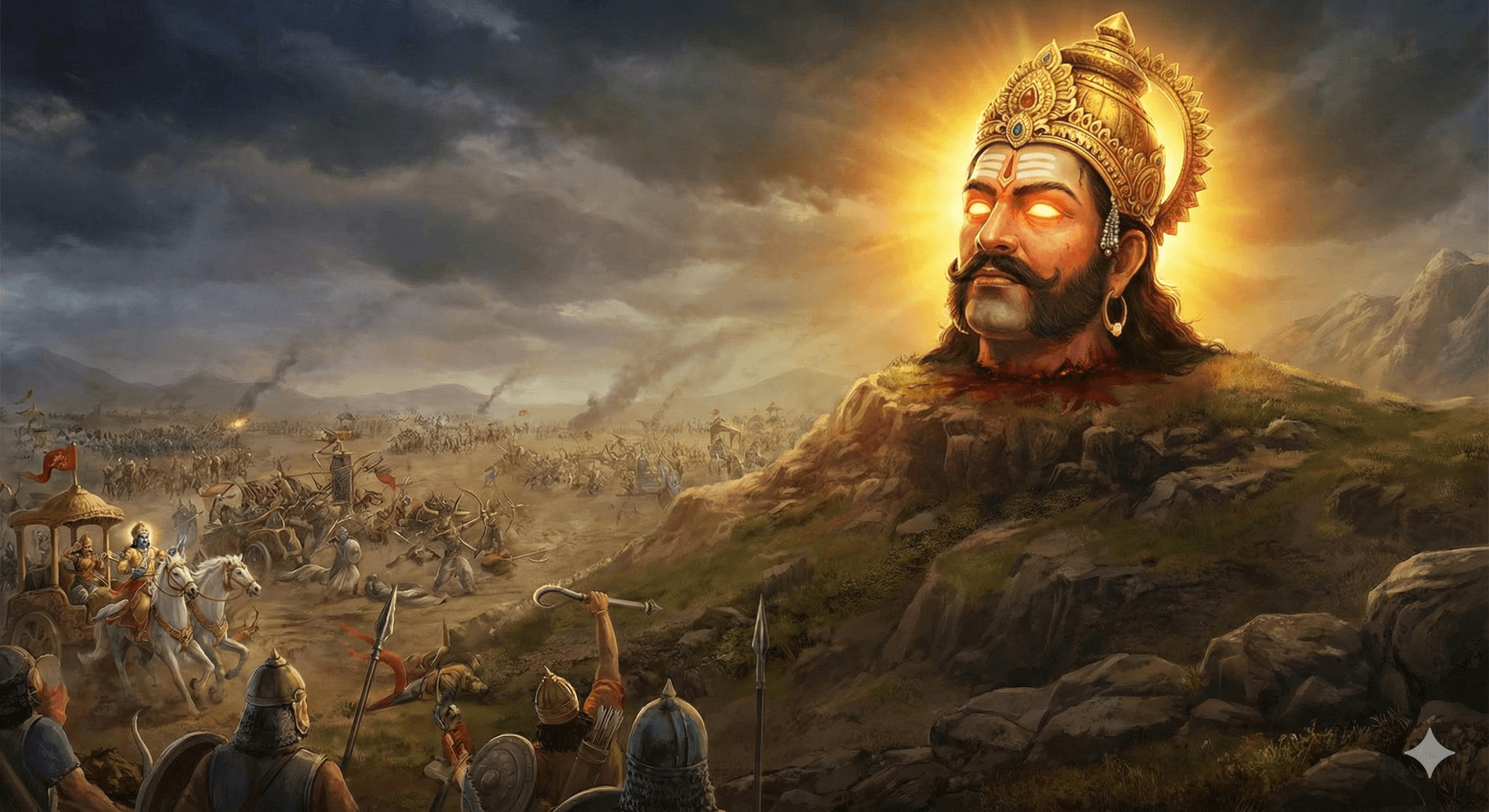
The aftermath of the epic
Part II: The Discovery & Evolution
From a legendary 11th-century village discovery to a modern ₹100-crore pilgrimage corridor.
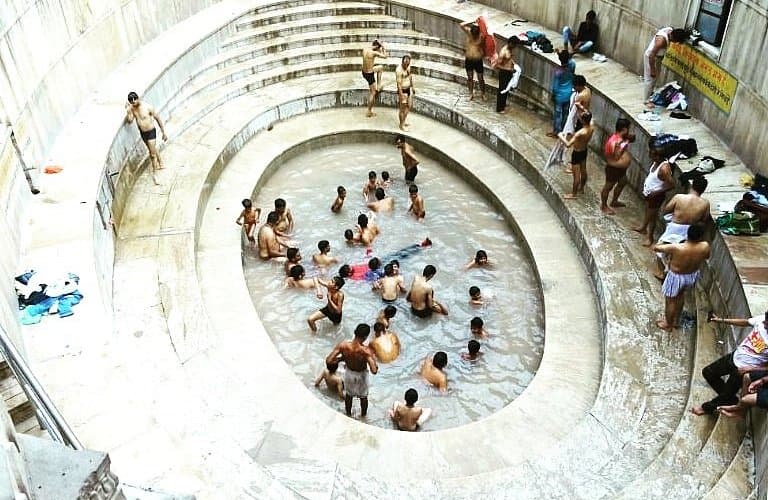
Shyam Kund — The exact sacred excavation site and holy pond
The 11th-Century Miraculous Re-Emergence
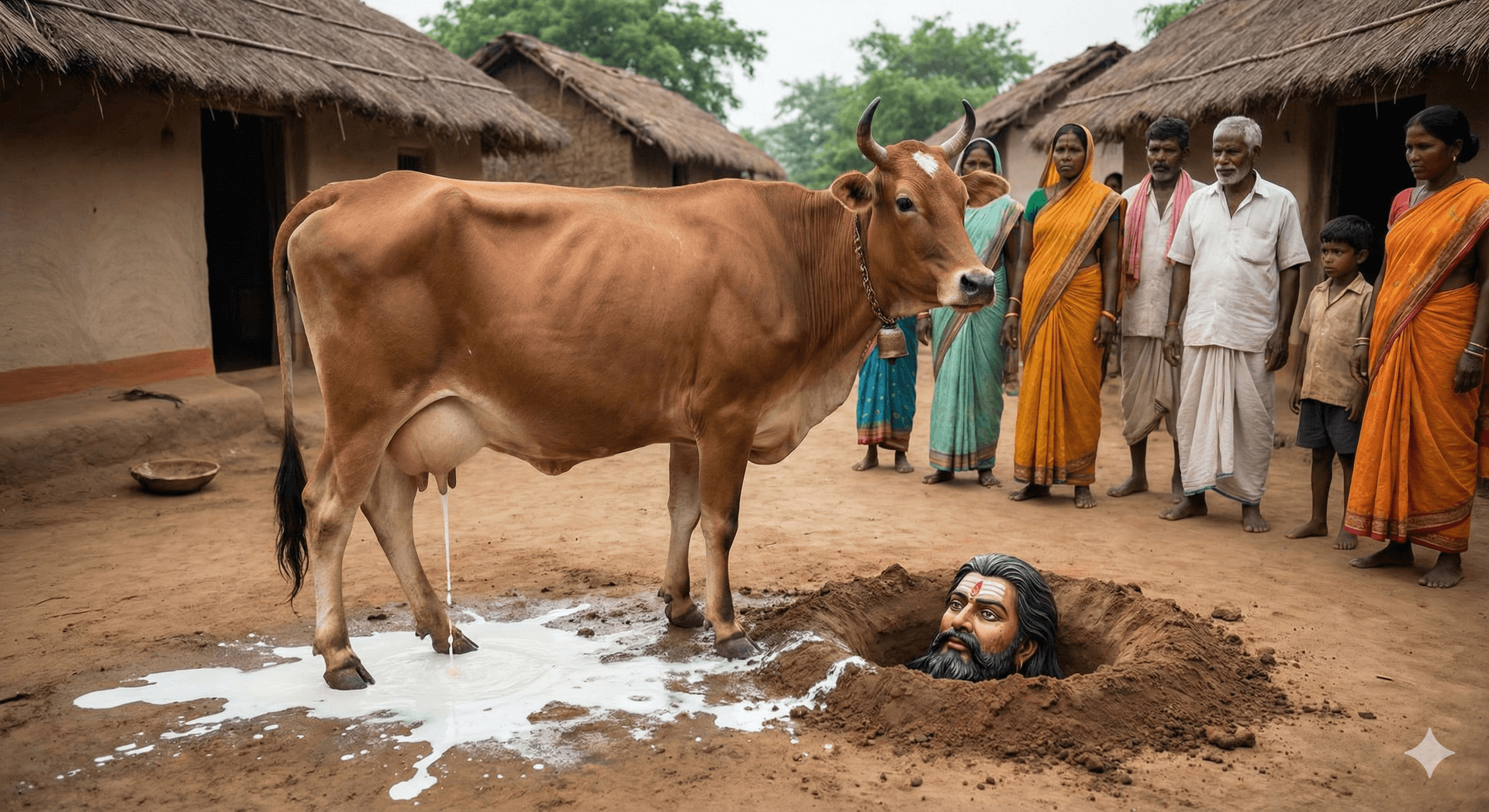
Following the great war, Lord Krishna immersed Barbarika's immortal head in the river Rupavati with blessings, declaring it would re-emerge at the destined time in Kaliyuga. Centuries later, in the 11th century CE (~1027 AD), in the present-day agrarian village of Khatu (Sikar district, Rajasthan), a profound foundational miracle occurred that birthed the entire shrine.
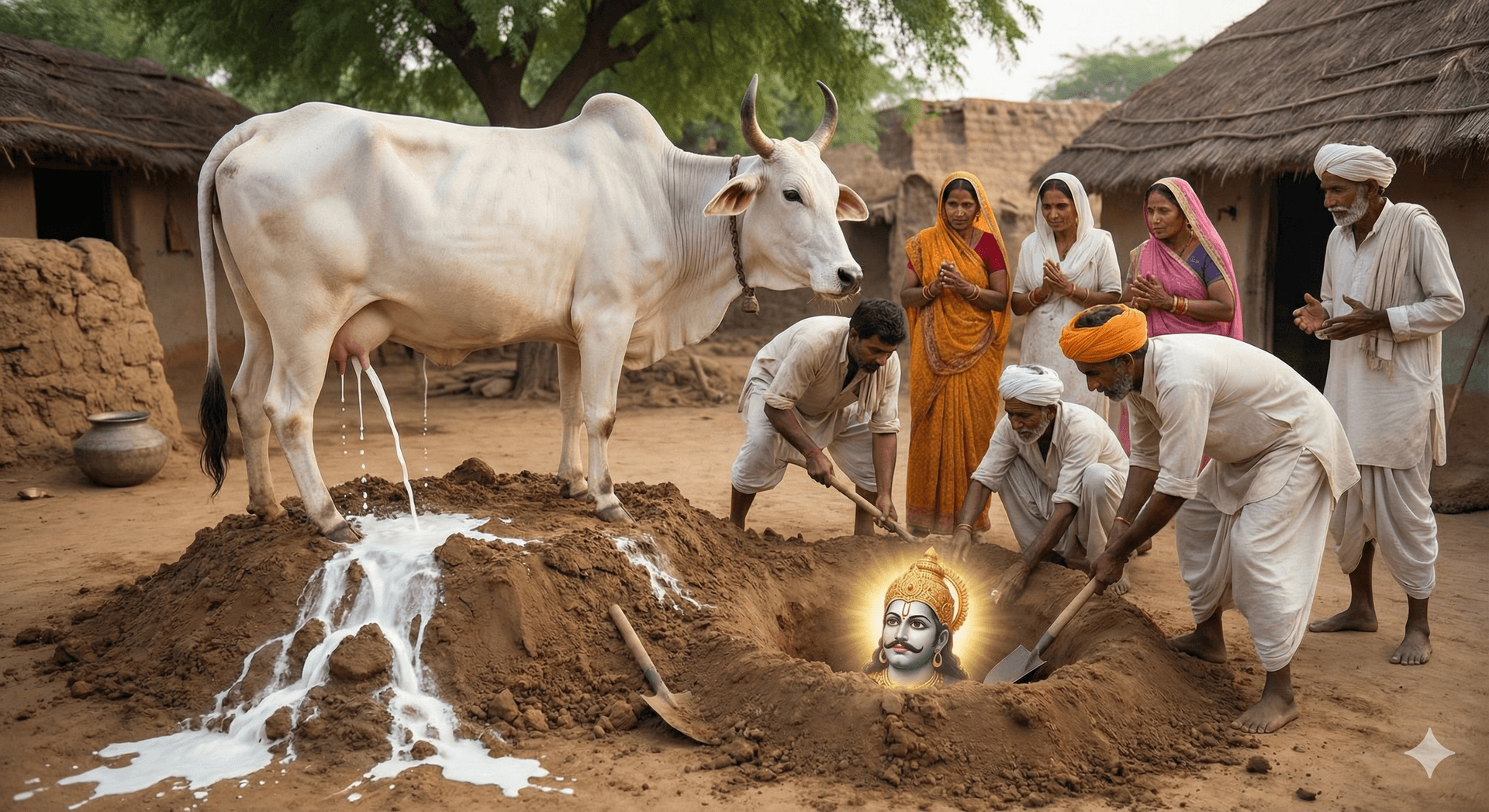
A local herdsman noticed something astounding: one of his cows would detach from the herd every day at a specific earthen mound. She would spontaneously release all her milk directly onto the ground, returning to her calf completely dry. After observing this impossible phenomenon for fourteen consecutive days, the farmer reported the event to the local ruler, Roopsingh Chauhan.
The Royal Dream
Queen Narmada Kanwar experienced a powerful divine vision precisely the night before the excavation. In her dream, Shyam Baba appeared in his glorious celestial blue form.
He commanded her to build a temple and enshrine his head, explicitly confirming that the spot of the cow's offering would become the epicenter of grace for all of Kaliyuga. Guided by this revelation, the royal excavation uncovered the perfectly preserved, luminescent head of Barbarika—appearing as untouched as the day it was severed in Dwapara Yuga.
The architectural majesty of Khatu Dham gates
Intricate silver and marble carvings adorning the temple interior
The historic gold Kalash towering over the village
Sacred Continuum
Eternal Sacrifice
Barbarika donates his head to Lord Krishna at Kurukshetra. The supreme boon of deity status is granted for the coming Kaliyuga.
Miraculous Discovery
Roopsingh Chauhan excavates the holy head at Shyam Kund following the cow's legendary milk offering miracle.
Marwar Expansion
Diwan Abhaisingh of Marwar renovates the shrine, establishing the current architectural footprint and Makrana marble gates.
Modern Corridor
Massive ₹100Cr corridor expansion and Ringas direct rail line transformation to accommodate the exponential crowd growth.
Architectural Evolution (1027 CE to Present)
1027 CE
The Royal Foundation
Built by Roopsingh Chauhan and Narmada Kanwar using ancient lime mortar. The idol was ceremonially installed on the 11th day (Ekadashi) of Kartik month.
1720 CE
The Marwar Expansion
Initiated by Diwan Abhaisingh. The Garbhagriha was vastly expanded, frescoes were added, and white Makrana marble gates were installed.
Modern Era
Swadesh Darshan
Integrated into the Krishna Circuit (₹75.80 cr). Currently undergoing a ₹100 crore corridor expansion catalyzed by a new direct rail line from Ringas.
The Toran Gate — Rajasthan's most photographed landmark
Aerial perspective of the sprawling temple complex
Defining Sacred Geographies
Shyam Kund
The holy pond marking the coordinates of the divine excavation. Taking a dip here is considered mandatory purification for devotees.
Gaurishankar Temple
An ancient Shiva temple where stone Lingam miraculously bled when struck by a historical assailant.
Shyam Bagicha
Sacred gardens cultivating roses and jasmine for daily Shringar. Houses the samadhi of medieval devotee Aloo Singh.
The Toran Gate
Located 1.5 km from the main temple, marking the start of the barefoot approach and a major modern social landmark.
Part III: Devotion, Rituals & Worship
"Haare Ka Sahara" — The spiritual mechanics of the ultimate refuge.
The Power of "Haare Ka Sahara"
The defining theological cornerstone of Khatushyamji worship is summarized in one phrase: "Haare Ka Sahara, Baba Shyam Hamara" (The refuge of the defeated, Shyam Baba is ours).
Unlike traditional deities worshipped primarily for victory or prosperity, Khatushyamji holds a unique position. He is the God of the defeated. Because Barbarika was denied the chance to fight and was forced to sacrifice his life at the start of the epic war, devotees deeply believe he possesses an infinite, unparalleled empathy for failure. He is the ultimate refuge for those who have exhausted all options, faced bankruptcy, suffered incurable illnesses, or lost all hope in their personal and professional battles.
The Five Daily Aartis
The temple operates on a strict liturgical schedule overseen by the Head Priest (Mahant), maintaining a continuous, unbroken connection between the deity and the pilgrim through five distinct ceremonies:
Mangala Aarti
The awakening of the Lord. The first and most serene darshan of the day, highly sought after by ascetic devotees before dawn.
Shringar Aarti
The grand decoration. The idol is meticulously adorned with heavily layered gold jewelry, floral garlands from Shyam Bagicha, and royal garments.
Bhog Aarti
The midday ritual where sacred food (Prasadam) is presented and blessed by the deity before distribution to the massive crowds.
Sandhya Aarti
The sunset prayer ceremony, accompanied by intense, hypnotic bhajan singing and the lighting of elaborate traditional lamps.
Shayan Aarti
The final farewell of the day as Baba is put to rest, hymns are sung, and the massive silver temple doors are closed.
The magnificent Shringar Aarti preparation
Millions of devotees carrying the sacred Nishan flags
The Toran gate illuminated during Sandhya Aarti
The Nishan Yatra
Ringas to Khatu: The Nishan Route
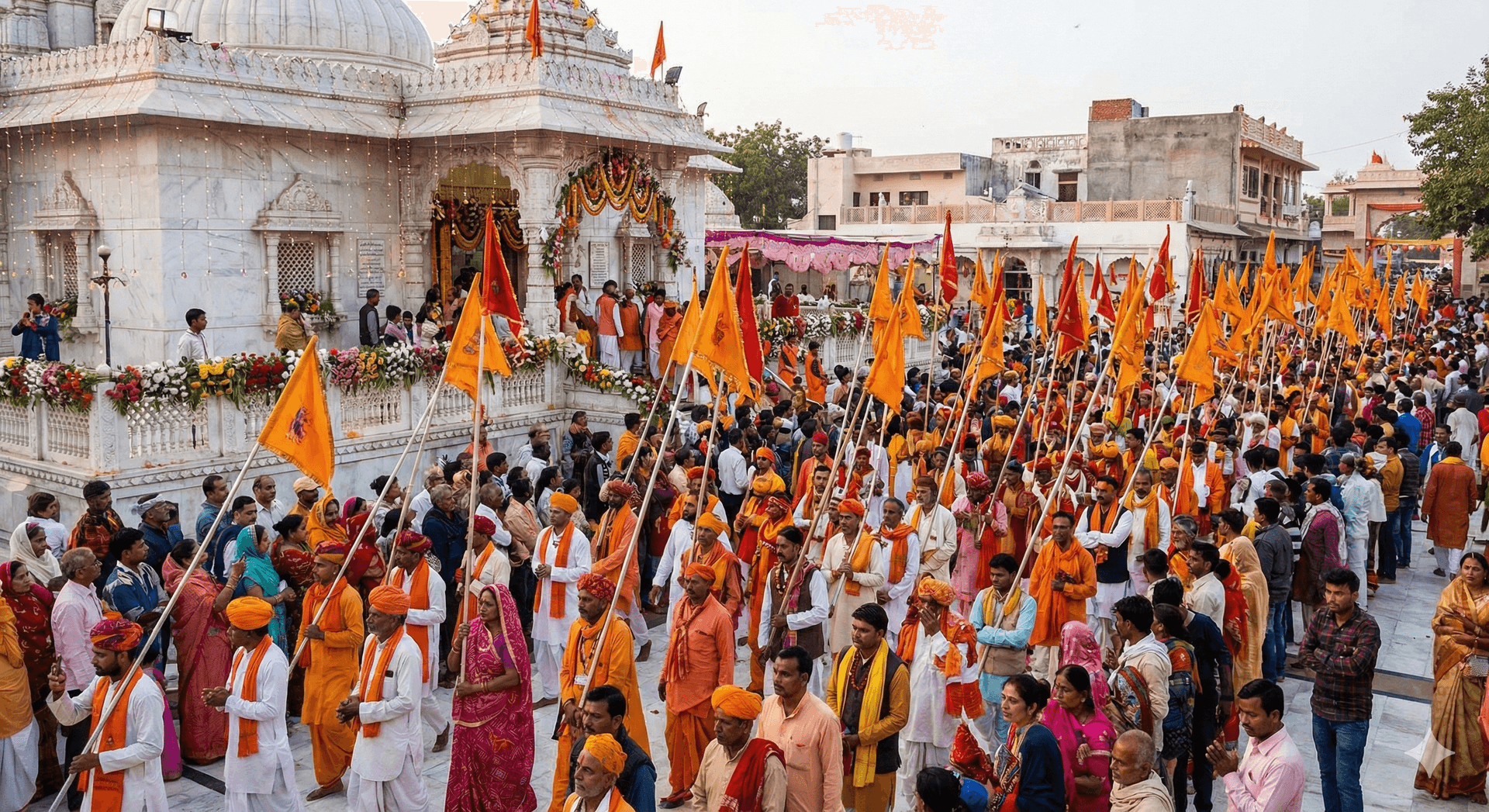
The Nishan Yatra is one of the most physically demanding and spiritually rewarding vows a devotee can undertake. A "Nishan" is a triangular cloth flag — typically saffron, red, or orange — adorned with Baba's divine portrait, gold tinsel, and bells, mounted on a high bamboo pole. Over 3 to 5 million Nishans are offered annually.
- 1Resolution: A sacred vow is made at the devotee's home during an hour of intense crisis.
- 2The Walk: Upon wish fulfillment, the devotee walks the 17-kilometer route from Ringas town to Khatu Dham completely BAREFOOT.
- 3Dandavat Parikrama: An extreme variant practiced by ~5,000 elite devotees annually, where the devotee prostrates entirely face-down on the highway for every single step of the 17km route, a grueling physical journey taking 3 to 4 days across blistering tarmac.
The 3-Bottle Attar Ritual
What began as a localized folk legend in the late 1990s has evolved into one of the most widely practiced modern rituals at Khatu Dham, catapulted to national fame by viral devotional songs crossing 100+ million views on YouTube.
According to oral history, a bankrupt perfume merchant from Rajasthan visited Khatu in sheer desperation. Having lost everything, the only offering he could afford was his last three bottles of fine attar (perfume). Standing before the deity, he fully opened and offered the first two bottles as total surrender.
For the third bottle, he slightly opened the lid, hastily whispered his urgent wish into the glass, and slammed it shut immediately — sealing his pending miracle. He vowed to return and fully open the third bottle only when his business was restored. Within days, his fortunes completely reversed.
Today, millions of devotees replicate this exact ritual, causing local perfume shops on the temple approach to report massive 300% sales surges during the Mela season as devotees whisper into countless tiny glass bottles.
Part IV: The Phalguna Lakhi Mela
Managing one of the largest continuous human mobilizations in modern India.
The sheer staggering scale of the 5-million devotee congregation during the Phalguna Lakhi Mela
The Phalguna Mela (also known as the Lakhi Mela or Fagotsava) is not just a festival; it is one of the most colossal religious mobilizations globally. Historically dubbed a "Lakhi" Mela (drawing attendees in the hundreds of thousands), it has radically evolved into a "Karodon" event, drawing an astonishing 5 to 6 million devotees over a 12-day period. The growth rate is staggering: 1.5 million in 2011 to 5 million in 2023, a 300%+ surge making it a top tier global gathering.
The Cosmic Alignment
The massive 12-day festival occurs during the Hindu month of Phalgun (February–March). Its peak occurs specifically between the 11th (Ekadashi) and 12th (Dwadashi) days of the bright fortnight, aligning perfectly with two massive chronological events:
- Ekadashi:The 11th Lunar Day. This commemorates the exact historical day in the 11th Century CE when Barbarika's divine head miraculously re-emerged at Shyam Kund after centuries of burial following the cow's legendary milk offering.
- Dwadashi:The 12th Lunar Day. This strictly commemorates the historical day (~3102 BCE) when Barbarika originally severed and donated his head (Sheesh Daan) to Lord Krishna on the Kurukshetra battlefield.
The Surajgarh White Flag procession arriving after a 300-year unbroken tradition
The massive Bhandara kitchens feeding over a million pilgrims entirely for free
The Toran gate overflowing with the 'Drive, Darshan, Display' millennial demographic
The Surajgarh White Flag: A 300-Year Resistance
The pinnacle visual event of the entire Phalguna Mela occurs on Dwadashi morning when the Chief Priest hoists the immense Surajgarh White Flag over the temple's towering gold kalash.
Adorned with the image of Barbarika's divine blue horse, this banner is brought entirely on foot from Surajgarh (a town on the Haryana-Rajasthan border). It represents over 300 years of unbroken resistance. During the 1700s, occupying Mughal authorities attempted to permanently ban this flag-hoisting procession. Later, in the 1800s, British colonial officials tried to outlaw the practice to prevent mass socio-religious gatherings.
Both global empires failed. The tradition endured without skipping a single year. The rising of the white flag remains the official commencement for millions of devotees to break their fasts and begin the massive Kheer-Churma prasad celebrations.
Phalguna Mela Metrics
Source Integrity
Verified from Rajasthan Devasthan Records, Khatu Trust Analytics, and Police Mobility Reports.
The "Drive, Darshan, Display" Era
The socioeconomic transformation is stark. Temple donations surged from ₹13.5 crore in 2020 to ₹250 crore in 2023. Urban researchers categorize this modern youth pilgrimage through the "4D Pattern:"
- 🚙 Drive: Massive road trips gathering friends and blasting viral bhajans.
- 🙏 Darshan: 2-to-8 hour exhausting queues for a 5-second glimpse.
- 📸 Display: Instagram reels and Toran Gate selfies (#JaiShreeShyam).
- 🔙 Depart: Returning exhausted but spiritually recharged.
Part V: Miracles & Divine Interventions
"When human capability fails, the divine steps in."
The Sociology of Faith
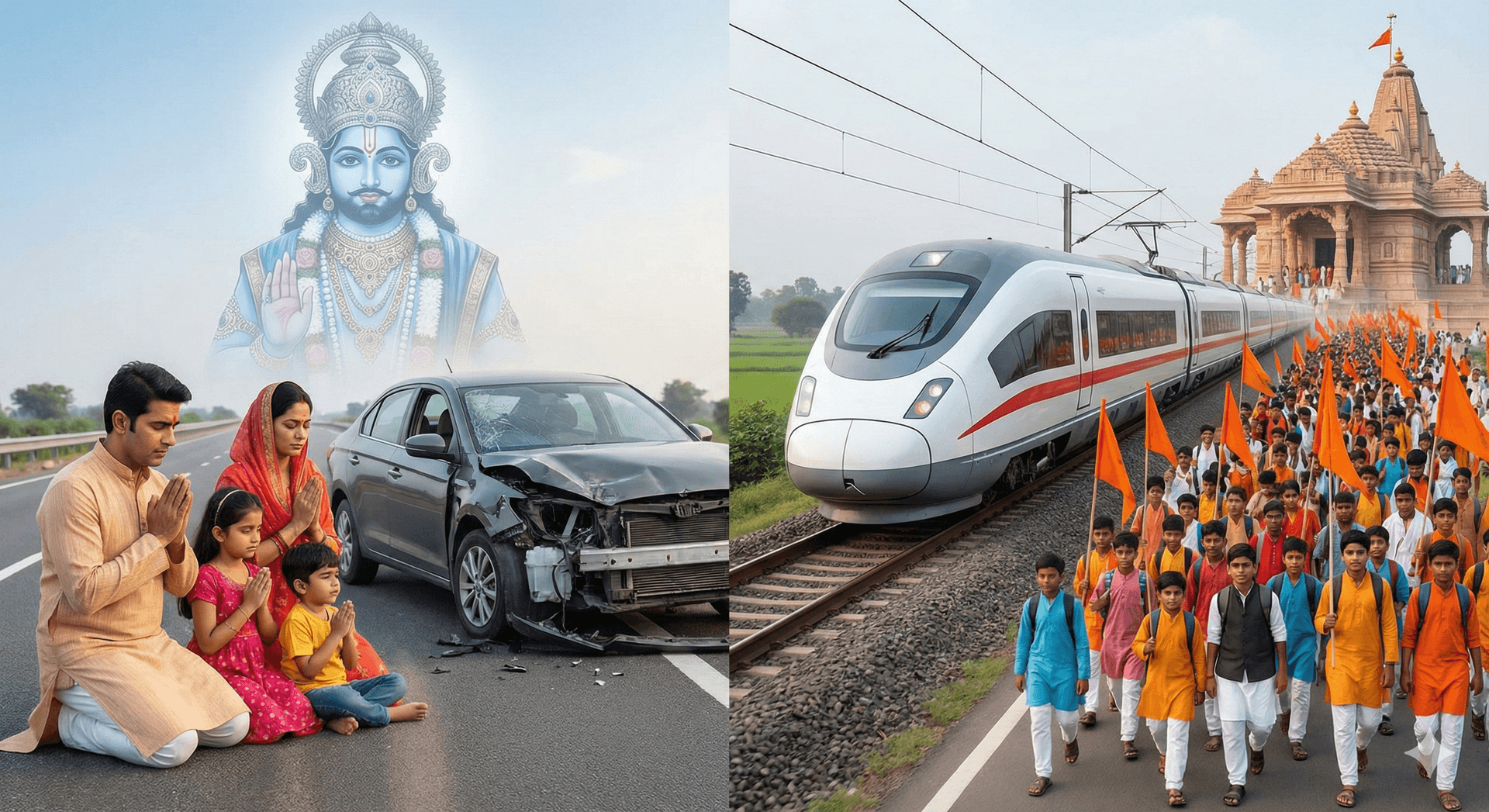
In orthodox theology, miracles are expressions of divine grace, existing primarily in the realm of faith and personal testimony rather than scientific falsifiability. However, the sheer volume of corroborating first-hand accounts—documented by regional media like the Rajasthan Patrika, police FIR boards, and temple trust records—positions Khatu Dham as a living epicenter of contemporary supernatural occurrences. Demographic tracking reveals patterns: 28% of reported miracles involve medical recovery from "incurable" diseases, 22% deal with instantaneous financial reversals from imminent bankruptcy, and closely following at 18% are inexplicable survival stories from catastrophic road accidents.
The NH-52 Collision (May 2024)
Four devotees were returning from Khatu darshan in a Thar jeep traveling along National Highway 52 near Churu. They suffered a catastrophic head-on collision with an oncoming Bolero SUV. The Bolero was completely destroyed, and tragically, 5 of its 6 occupants were killed instantly. The Thar was severely mangled beyond repair.
"We were chanting 'Jai Shree Shyam' continuously from the temple. When the crash happened, it felt like an invisible force wrapped around us. The metal crumpled around our bodies, but not a single piece touched our skin. Baba saved us."
— Survivor Statement (Police FIR Churu Station)The Delhi Dham (Constructed in 15 Months)
A social worker in Delhi, Ghanshyam Gupta Zaveri, began experiencing repeated, vivid dreams of Khatushyamji directly instructing him: "Build me a grand Dham in Delhi." Zaveri had absolutely no construction experience, zero logistical infrastructure, and limited initial funding for such a monumental task within the complex bureaucracy of the capital.
Defying all logistical odds, the multi-level massive temple complex was structurally completed in an astonishing 15 months. When critical permits stalled, they were mysteriously cleared overnight. When funding halted, over ₹50 crore in anonymous donations arrived spontaneously just in time to pay contractors. The rapid construction of the Delhi Dham is cited by urban developers as a logistical miracle driven purely by mass devotion.
— Inaugurated 2023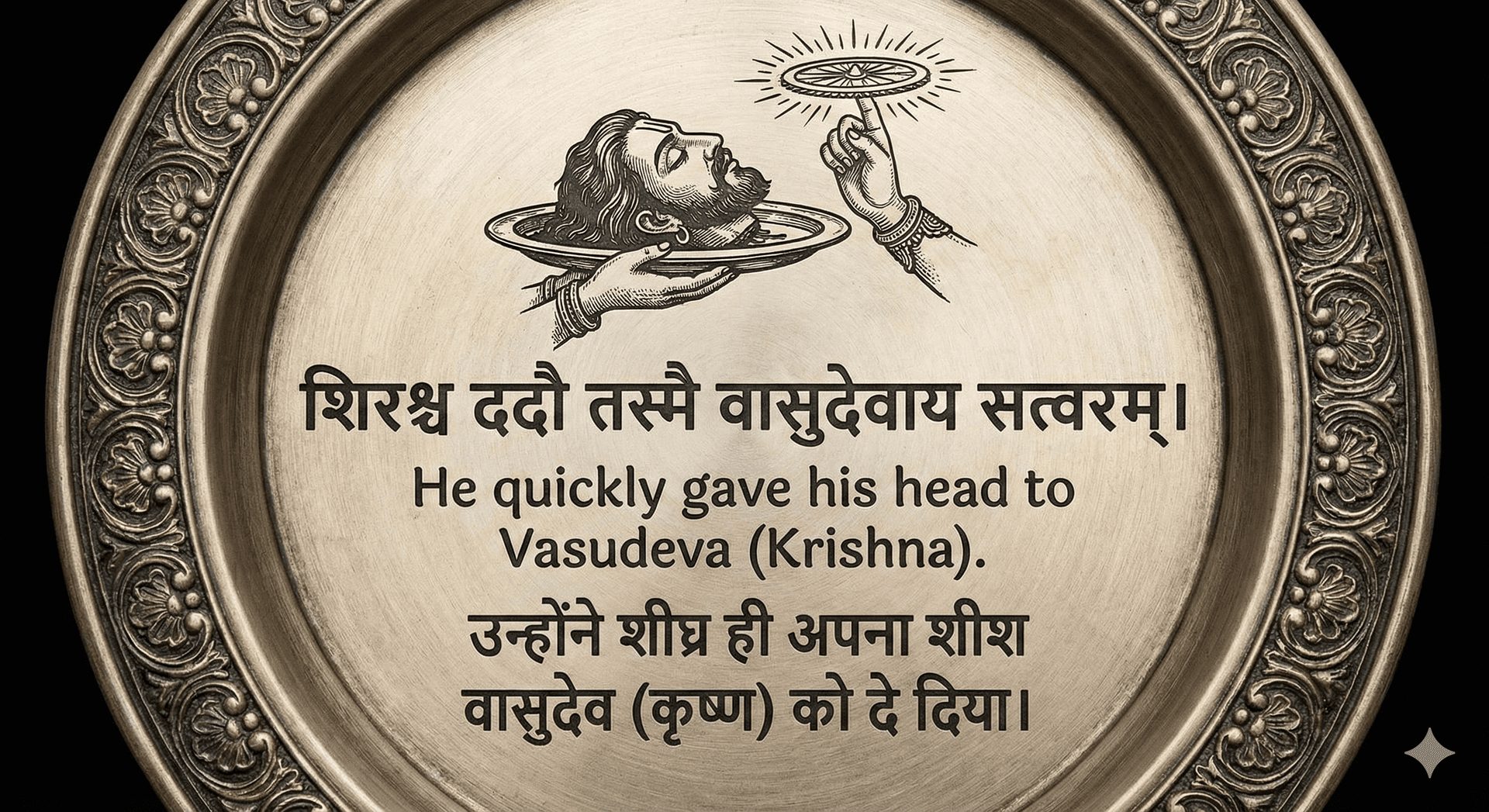
The miraculous emergence of the deity to grant refuge
The "Blue Uncle" and the Kidnapped Boy
June 2025 • Khatu Complex
During a massive Mela surge, a 5-year-old child named Raksham was kidnapped from the temple complex. A massive 5-day state police manhunt yielded absolutely no results. A local police constable, an ardent devotee, stood before the Garbhagriha and vowed internally to offer a barefoot Nishan Yatra if the child was returned unharmed.
The very next morning, an anonymous tip led police to a secure lockup in a neighboring village. The child was found completely unharmed, well-fed, and inexplicably calm.
When interrogated about how he survived the traumatic 5-day absence without panic, the 5-year-old stated on record:"A blue uncle came every night. He held my hand and told me not to be scared. He brought me sweet food."
Note: The child had no prior theological knowledge of Baba's physical iconography. Police found no physical evidence of any adult accessing the locked room.
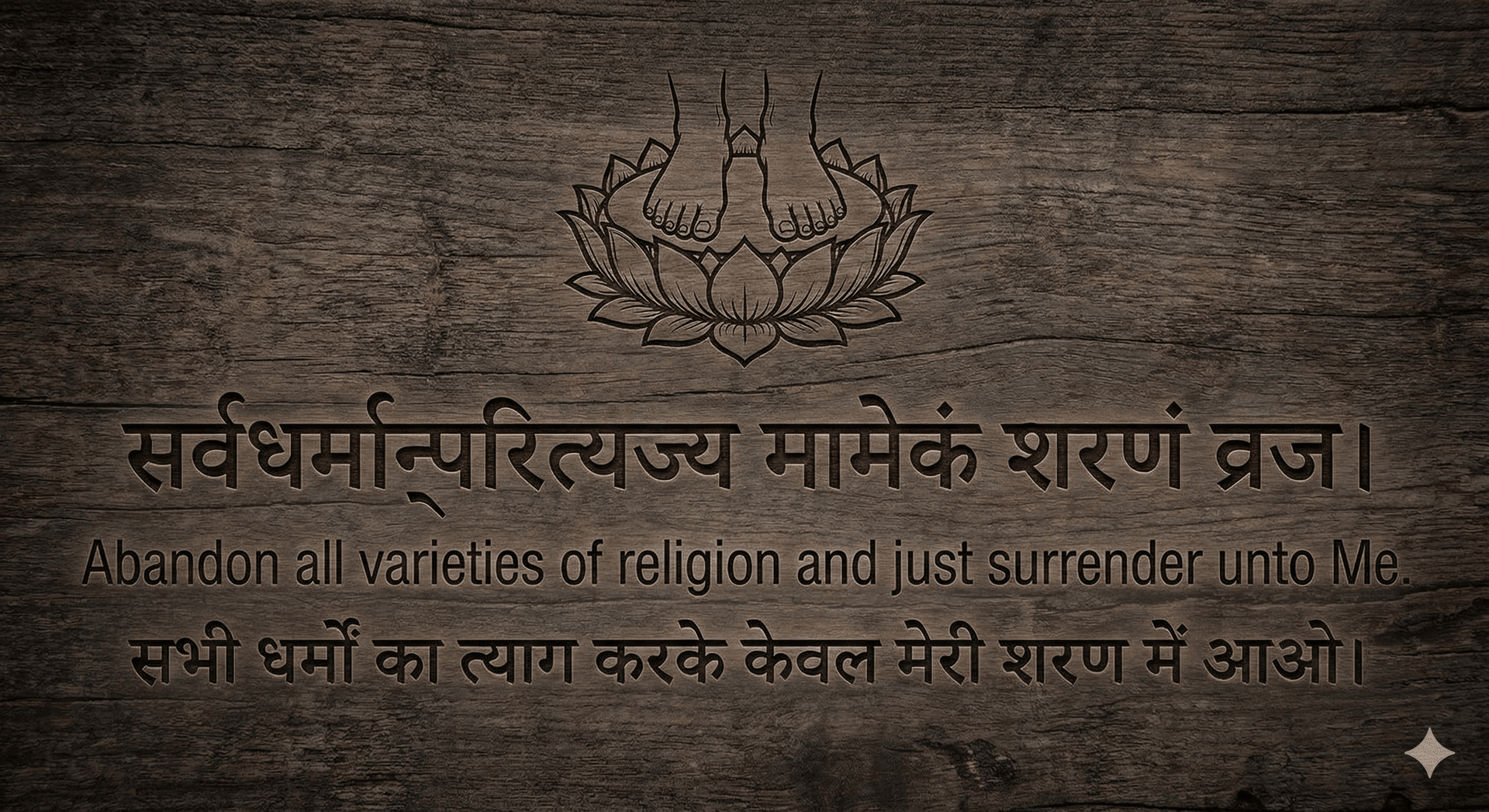
The profound emotional surrender witnessed daily
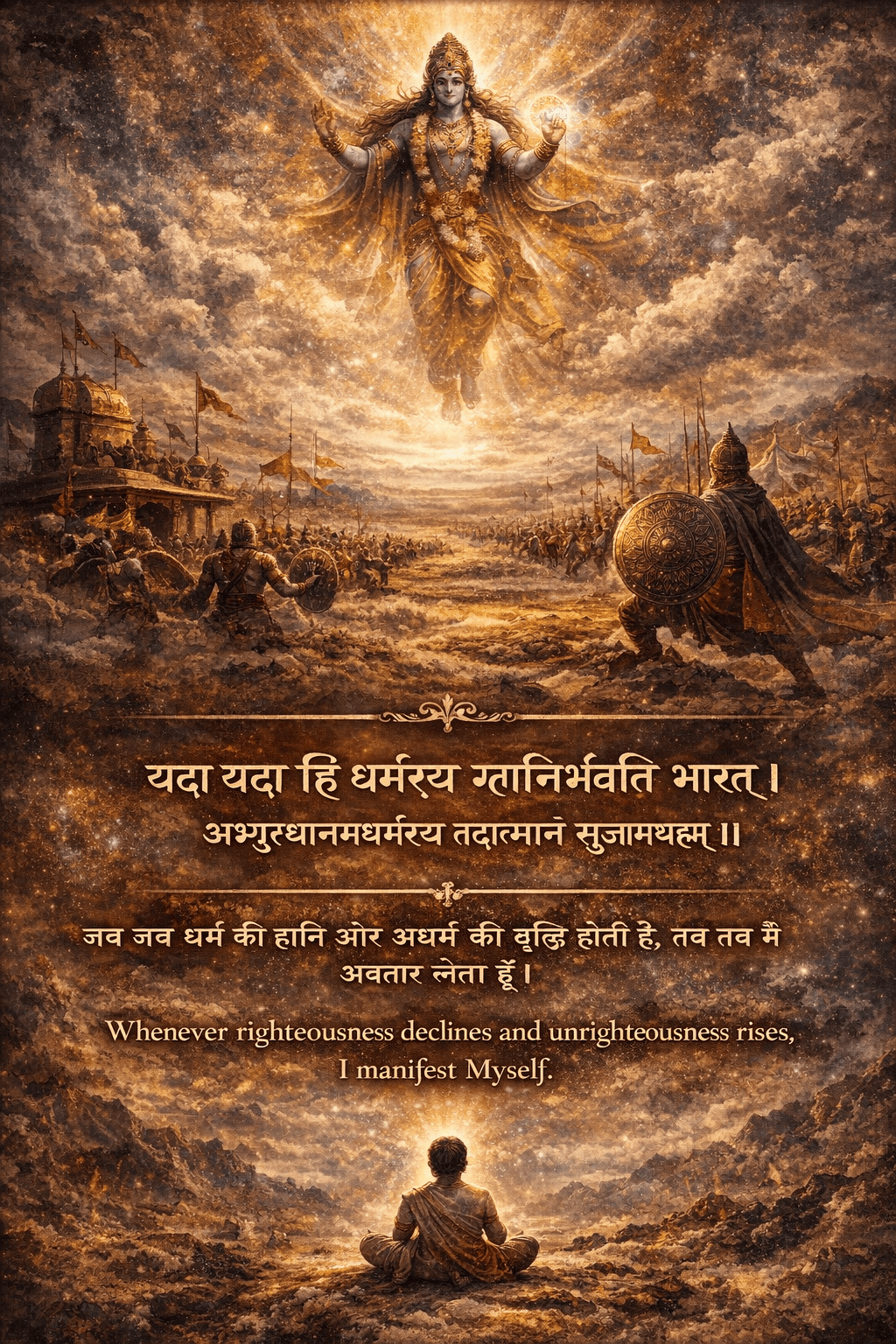
Physical endurance testing the limits of human capability
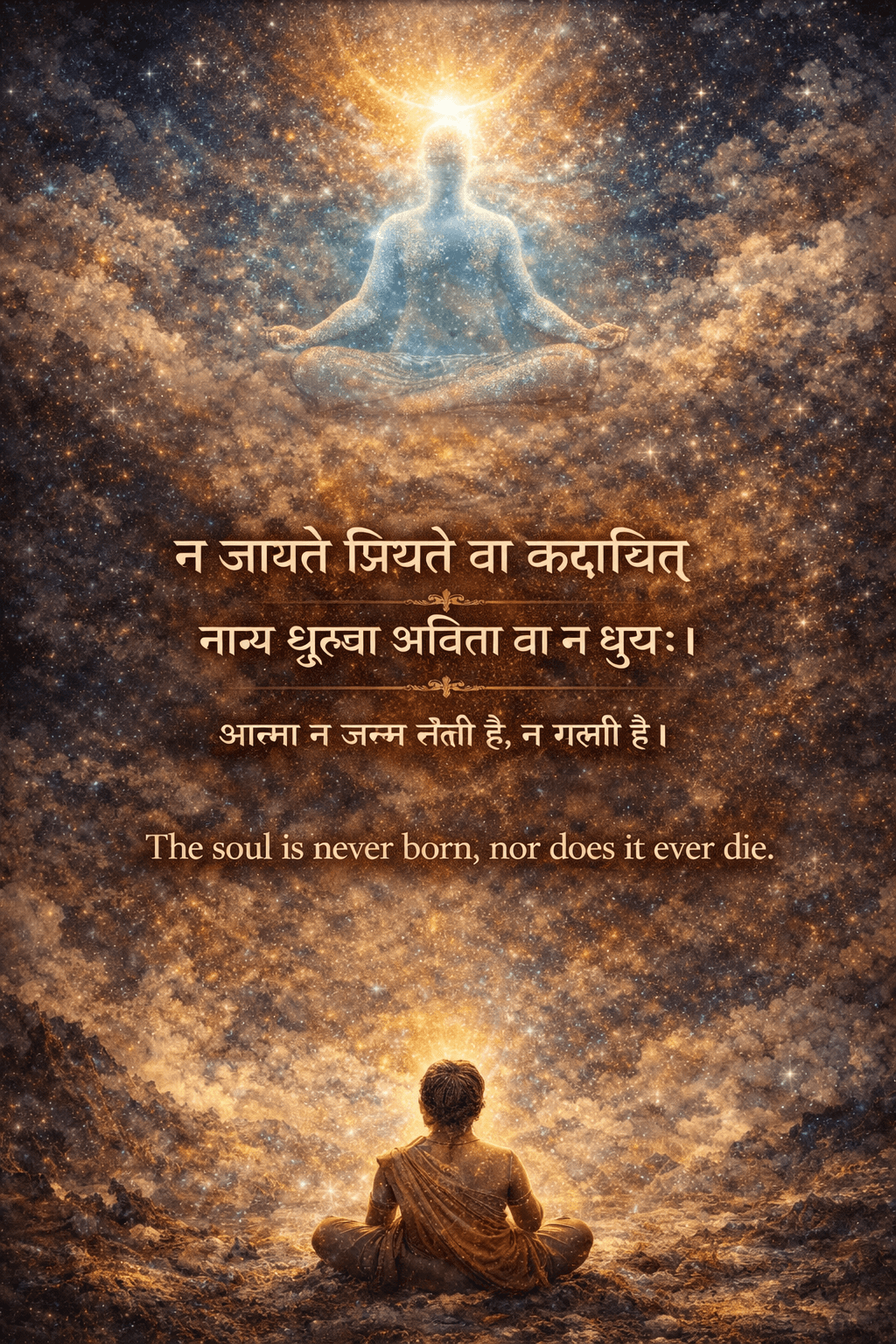
The glowing emblem of hope in modern India
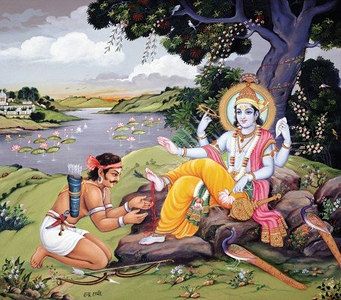
The Divine Iconography
The Ultimate Teaching
"Barbarika's story teaches that true victory lies not in winning, but in surrendering with grace. He lost everything — his chance to fight, his life, his head — yet gained immortality through that very loss. In an age obsessed with cut-throat success, Khatushyamji reminds the millions who walk through his Toran Gate that defeat is not the absolute end, but merely another profoundly beautiful form of divine grace."
Part V: Data Intelligence & Impact
Visualizing the exponential growth and socio-economic momentum of Khatu Dham.
Visual Visitor Intelligence (2010–2026)
Regional Concentration
Economic Momentum
Regional economy around Khatu-Ringas has surged by an estimated ₹1,200Cr annually due to religious tourism.
Source Integrity
Metrics aggregated from Devasthan Department reports, Rajasthan Police mobility data, and Khatu Trust annual audits.
"The Dhwaj Effect"
Every Nishan offered (₹200–₹5000) generates massive localized micro-economies powering thousands of families.
Verified Data References & Sources
[1] Skanda Purana: Guptakshetra Mahatmya (Origins, Kunda Battle, Boon).
[2] The Mahabharata: Bhishma Parva (Philosophical context of Bhagavad Gita sacrifice).
[3] Devasthan Department, Government of Rajasthan (1027 CE Temple Records).
[4] Khatu Temple Trust Official Data (Visitor Demographics, Aarti timings).
[5] News Reports: Times of India, Rajasthan Patrika (Visitor growth stats, Devotee Miracles).
[6] Government of India: Swadesh Darshan Scheme, Krishna Circuit infrastructure data.